

Original article ISPreview UK:Read More
Last night at 9pm saw England take on Croatia in their first FIFA World Cup 2026 match and, given the growing prevalence of TV streaming solutions and the fact that the match took place outside of normal working hours, we were keen to learn whether this would have a noticeable impact on internet traffic. ISPreview has thus examined the impact on several networks.
In the past such events, when taking place outside of working hours, wouldn’t have moved the network traffic dials all that much because people have tended to tune in via more traditional terrestrial TV signals. But these days video streaming-based TV platforms are much more common and thus live sporting events might now have a more noticeable impact.
However, weighing against that is the fact that broadband and mobile providers usually prepare for such events in advance, often by delaying routine maintenance and laying on extra capacity (example). Internet providers also use sophisticated Content Delivery Networks (CDN) and systems to help manage the load, which caches popular content closer in their network to end-users (i.e. improves performance without adding much strain to external links).
As usual ISPreview were monitoring to see what kind of impact the match would have on data traffic (i.e. we asked several broadband and mobile operators to monitor the event) and the first of several results have now come in. We’ll kick things off with data from the London Internet Exchange (LINX), which handles a large chunk of UK and global traffic through their switches via around 900+ members (ISPs, mobile and CDN providers etc.).
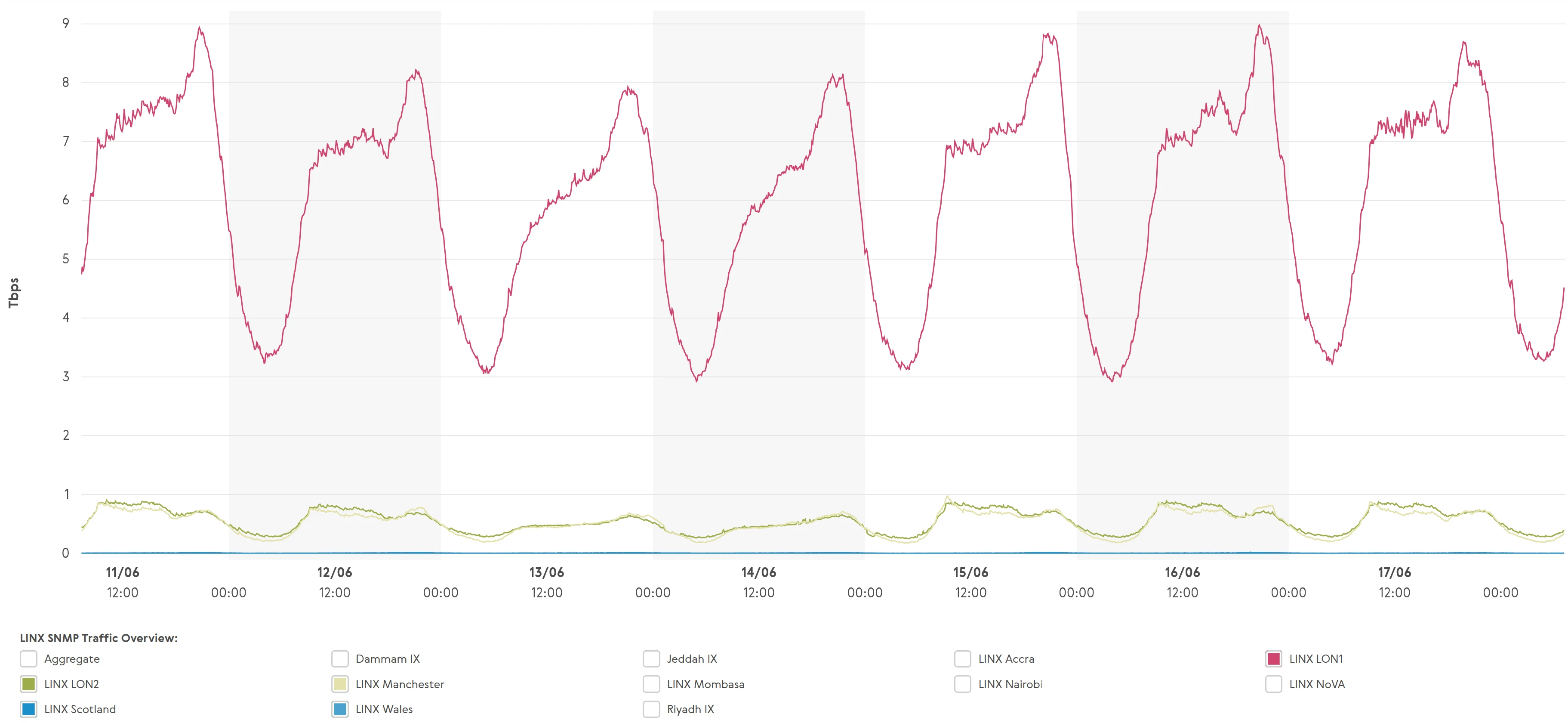
The traffic levels for 17th June 2026 across all of LINX’s UK exchanges (depicted on the right side of this chart), particularly their largest LON1 IXP, don’t show anything remarkable. The daily peak was actually lower than the day before, although the length of time that traffic levels spent above the 8Tbps (Terabits per second) mark on LON1 was longer than on prior days – possibly reflecting the length of the match.
Netomnia has similarly reported that “there wasn’t any noticeable increase in traffic levels” during the match, when traffic across their alternative broadband network actually dropped a little when compared with the same peak on Wednesday night (consistent with LINX above). We’re currently awaiting feedback from several other operators and will update this article when that arrives.
The situation may of course be different for events held during working hours.
UPDATE 10:24am
According to Virgin Media and O2 – compared to a normal week, mobile data traffic was up 9.16% during the game (likely reflecting greater use of social media). But fixed broadband traffic saw no significant change.