Optus ditches football rights to focus on telecoms | Total Telecom

Original article Total Telecom:Read More

people watching soccer arena

Press Release

Optus has today announced it has accepted an offer from Nine Entertainment Co and Stan to assign the rights to the Premier League and Emirates FA Cup for the remainder of the rights term.

Under the agreement, Stan will provide Optus Sport customers (who remain Optus telecommunications customers) with discounted pricing so that they can continue to watch the Premier League and other transferred content and provide additional offers to Optus Sport customers who subscribe to Stan Entertainment and Stan Sport.

Optus will make contributions to the rights payments that Stan makes to the Premier League.

On completion, Stan will pay Optus an upfront payment of $20m and a significant contribution towards the first payment of the next rights cycle.

Stan will begin broadcasting the Premier League ahead of the season kick-off on August 16.

Stephen Rue, Optus CEO said a decision had been made to focus on Optus’ core operations in telecommunications, its commitment to customers, and unlocking further value for the business in the future.

“Optus Sport has delivered outstanding sports broadcasting to Australian football lovers for almost a decade,” Mr Rue said,

“One of our key priorities was to find a home for Optus Sport content which would take the game forward and enable all Optus Sport subscribers to continue to receive uninterrupted access to all their favourite football action.

“Optus Sport customers and the game of football will be in great hands at Stan, and we know the game will receive the broadcasting priority it deserves from an organisation whose speciality is delivering quality sports programming to its customers.”

The rights to the J. League and National Women’s Soccer League will also be transferred to Stan under the agreement.

Customers will receive detailed information and special offers in coming days to ensure the transition to Stan is as simple as possible.

Matt Stanton, Nine CEO said the agreement would further strengthen the Group’s premium sport portfolio across streaming, digital and free-to-air platforms.

“The Premier League is the most-watched football league on the planet, and alongside the FA Cup, this acquisition reinforces Nine’s position as the home of sport in Australia. We are proud to deliver these iconic competitions to Australian audiences through Stan Sport,” Mr Stanton said.

Following the transition of sports rights on 1 August, Optus Sport will be closing in its entirety.

Mr Rue said Optus had made a significant contribution to growing and developing the world game in Australia through Optus Sport since it was first launched in 2016.

“We are proud of the contribution of Optus Sport to the elevation of football broadcasting in this country and have watched audiences in both the men and women’s game continue to grow during this time, “ Mr Rue said.

“Among all the games streamed over the last decade, clear highlights include the broadcast of the 2023 FIFA Women’s World Cup hosted in Australia, which was a historic moment for Optus and women’s sport across the globe, and the Men’s UEFA EURO 2024 hosted in Germany.”

Fans will still be able to tune into the broadcast of the UEFA Women’s EURO 2025 championship commencing in July on Optus Sport.

Keep up to date with all of the latest telecoms news from around the world with the Total Telecom newsletter 

Also in the news:
SWR deploys Europe’s first ’Rail-5G’ Wi-Fi  
BT accelerates fibre rollout amid cost cuts
AT&T agrees $5.75 billion deal for Lumen’s consumer fibre asset

Nokia launches digital twin platform Enscryb to digitalise energy sector | Total Telecom

Original article Total Telecom:Read More

tilt shift lens photography of clear glass bulb

Press Release

Nokia has announced its latest venture, Enscryb, an energy innovation platform, is partnering with NODES, an energy trading company. In addition, Enscryb has also secured and onboarded two customers: Nanuq, a charging infrastructure company, and Smartecon, a renewable energy provider.

Enscryb is an innovative digital toolbox that enables real-time distributed energy flexibility orchestration in an era of increasing market volatility, demand and renewable production by simulating electricity systems of any size and complexity. The Enscryb toolset also provides energy flexibility forecasting for battery energy storage systems and solar hybrid assets. By analyzing data from both markets and clients’ own infrastructures, Enscryb enables more accurate and bankable financial modeling for renewable energy projects.

“Enscryb is the latest proof-point that our venture incubator is finding new ways to commercialize Nokia Bell Labs technology. Nokia is very proud of Enscryb and its first partner and customers. We are looking forward to the opportunity to contribute to a sustainable energy future by helping the energy industry transition through digitalization,” said Chris D. Jones, Vice President for Strategic Partnerships, Nokia.

Based on technology from Nokia Bell Labs, Enscryb is the latest Nokia venture to engage external partners and customers. These collaborations stem from Nokia’s internal venture incubator dedicated to innovation and new commercialization paths for Nokia Bell Labs technology.

By contributing to reducing energy expenses, increasing grid resiliency and transitioning toward Net Zero, Enscryb also emphasizes Nokia’s commitment to sustainable businesses.

NODES facilitates the trading of flexibility resources and Distributed Energy Resources (DERs) between System Operators and Flexibility Service Providers, aggregators and large Industrial and Commercial assets. This activity supports the sustainability sector and contributes to the development of emerging energy flexibility and congestion markets.

“This collaboration strengthens the foundation for a more resilient and dynamic flexibility market. Enscryb’s ability to optimize DERs investment decisions and operations by using real-time orchestration and advanced value stack strategies complement NODES’ market design. This synergy helps stakeholders unlock greater value from their energy assets,” said Svein Jørgen Sønning, Head of Technology, NODES.

Nanuq helps its industrial customers transition to electrified fleets. They plan investment and operation of fleets with local generation resources and charge points to ensure maximum efficiency by lowering energy operation expenses.

Smartecon is a pan-Baltic EPC company specializing in utility-scale renewable energy projects. It helps developers and asset owners bring solar, battery, and hybrid power plants from concept to grid connection, with a strong focus on grid compliance, technical design, and hands-on project execution.

“At Smartecon, we don’t just build, we help clients make sense of complexity. Enscryb complements our approach by turning market and infrastructure data into actionable insights. With this partnership, we can deliver not only bankable energy systems but also smarter planning and better performance from day one,” said Hannes Aus, Chief Development Officer and Co-Founder, Smartecon.

VodafoneThree Sign Exclusive UK Mobile Operator Distribution Deal with Currys | ISPreview UK

Original article ISPreview UK:Read More

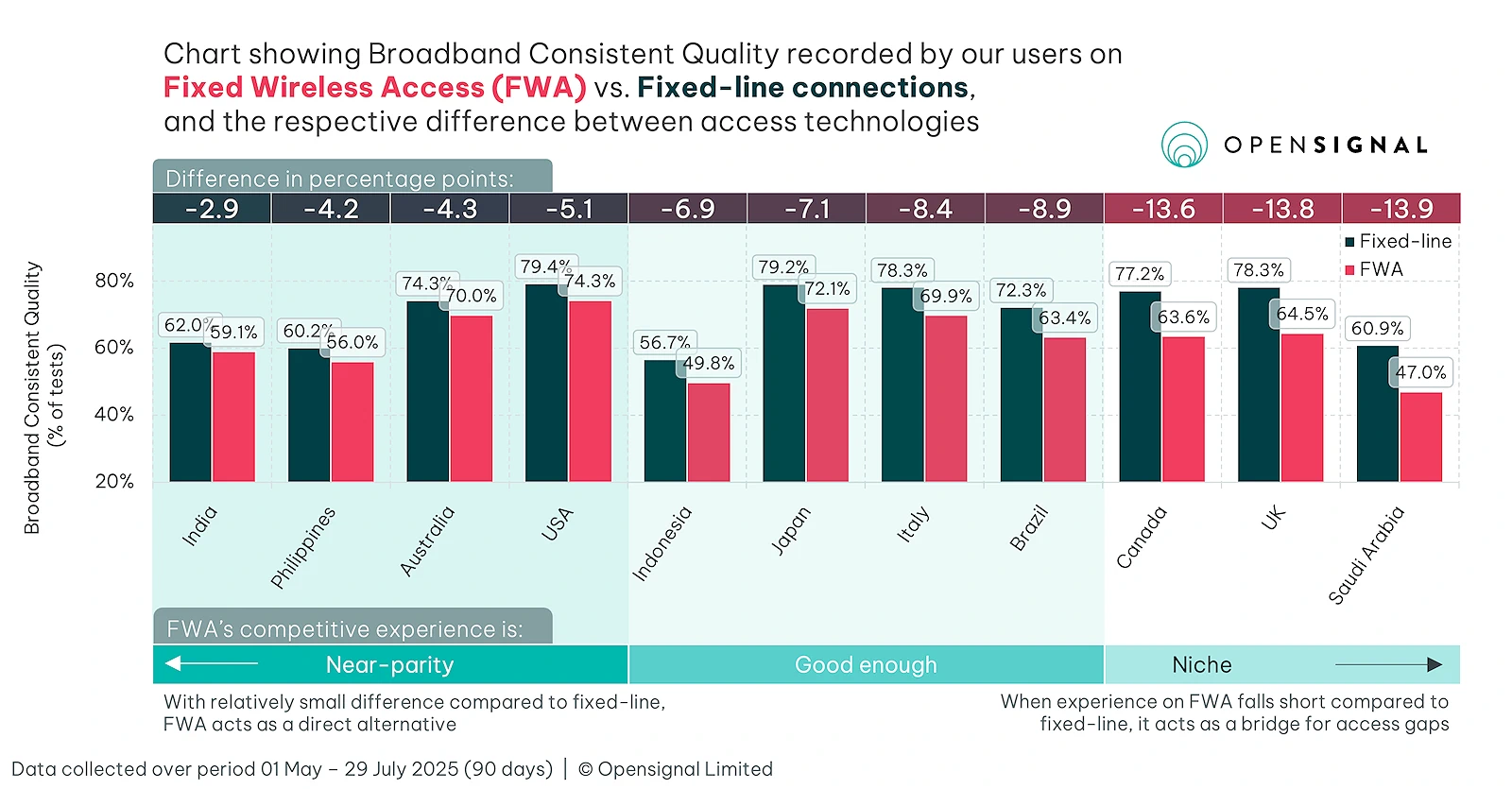
VodafoneThree (Vodafone and Three UK) has today announced an exclusive new multi-year partnership with high street retailer Currys, which will see the newly merged operator becoming the retailer’s sole mobile network operator (distribution deal) and also expanding their offering to “include mobile broadband” (Fixed Wireless Access).

Just to recap. Vodafone already has a retail partnership with Currys, which was last updated in January 2023 and saw their offering go beyond mobile and introduce home broadband and connected devices for around the home. But the new agreement expands this to include the newly merged company and will see the operator offering mobile services, home and mobile broadband under the Vodafone brand via Currys, as well as VOXI mobile.

The announcement clearly states that “VodafoneThree will be the exclusive mobile network operator (MNO) for Currys,” which is interesting since Currys is also the owner of Three UK based virtual operator (MVNO) iD Mobile (the fact it’s based off Three UK may avoid a clash with this deal). Some of Currys investors have, however, previously indicated that they would like iD Mobile to be sold in order to better “realise shareholder value” (here).

Jon Shaw, Consumer Operations Director at VodafoneThree, said:

“I am delighted that we can announce a new exclusive partnership with Currys just weeks after the creation of VodafoneThree. This new wider ranging partnership will allow Currys and VodafoneThree to explore greater opportunities in home and mobile broadband, for consumers and businesses across the UK. It’s an exciting time as we build the UK’s best network, with millions of customers already starting to benefit from unrivalled access to roam across each other’s networks at no extra cost.”

Ed Connolly, Chief Commercial Officer for Currys, said:

“Signing this multi-year agreement with VodafoneThree demonstrates the strength of our long-term partnership. We’re confident in our shared commitment to providing customers with quality, flexibility and value across mobile, home broadband and mobile broadband too. This agreement will allow customers to continue using the improved coverage, speed and reliability of the VodafoneThree network in the UK. Our mobile offering is growing, it’s working for our customers, and it’s working for us too.”

Currys currently has nearly 300 stores across the UK, while Vodafone has over 400 stores.

Broadband ISP Carnival Internet UK to Reduce eWaste and Tackle Digital Exclusion | ISPreview UK

Original article ISPreview UK:Read More

New ISP Carnival Internet UK, which was launched in May 2025 (here) and is being backed by global tech company Dotlines (Dotlines UK), has today announced that they’ve partnered with Brixton-based charity Community TechAid to help “tackle digital exclusion and e-waste“.

With a small team of staff and a network of volunteers, the Community TechAid charity typically repairs and redistributes technology to individuals in need, ensuring access to essential digital resources. The ISP, which donates 1% of its customers’ bills to charitable initiatives, will help to support the charity via fundraising, device donations, sponsorships, and employee volunteering opportunities.

Olly Sedden, Director of Product, Commercial and Marketing at Dotlines UK, said: “This partnership with Community TechAid aligns with our mission to ensure digital access is a right, not a privilege. By donating a percentage of all our customers’ bills from our high-quality broadband, we can support the repurposing of devices to those that need them most; not only doing our bit to help bridge the digital divide but also leading the way in sustainable and socially responsible business practices from day one.”

Three UK Delivered Fastest Mobile Broadband Speeds at Glastonbury | ISPreview UK

Original article ISPreview UK:Read More

Network testing firm Ookla (i.e. Speedtest.net, Downdetector.co.uk) has today revealed that mobile operator Three UK delivered the fastest 4G and 5G mobile broadband speeds during last weekend’s Glastonbury Festival, which saw the operator produce a median average download of 347.66Mbps. But O2 (Virgin Media) were the slowest on 67.66Mbps.

The median mobile download speeds on Three UK were found to be “at least twice as fast” as those on any other operator, and the network also topped Ookla’s Quality of Experience (QoE) measures – reflecting the typical performance for web browsing, video calling, and gaming throughout the event.

PICTURED: Mobile reception quality across the 2025 Glastonbury Festival site – all mobile operators combined.

However, despite Three UK delivering the fastest speeds, the study noted that festival-goers were still “least likely to experience poor performance” on EE’s network throughout Worthy Farm. At the 10th percentile, which captures the slowest 10% of outcomes when signal was weakest or congestion highest, EE still recorded the fastest download and upload speeds of any operator.

One critical thing to point out here is that all network operators will be working to deliver event specific coverage and capacity for major festivals like this. Ookla has thus included data to show the difference between festival vs pre-festival performance, which shows quite a diverse set of results.

Ookla-2025-Glastonbury-Festival-Download-Speeds-by-UK-Mobile-Operator

SpaceX Burnt Up 472 Starlink Broadband Satellites in Last 6 Months | ISPreview UK

Original article ISPreview UK:Read More

SpaceX has revealed to the Federal Communications Commission (FCC) that it deorbited 472 Starlink ultrafast broadband satellites – burning them up in Earth’s atmosphere – during the six-month period from December 2024 to May 2025 (2.6 per day), which marked a significant increase from previous period of six-months when just 73 met a fiery demise.

At present Starlink has around 7,900 satellites in Low Earth Orbit (c.4,300 are v2 Mini / GEN 2A) – mostly at altitudes of c.500-600km – and they’ll add thousands more by the end of 2027. Residential customers in the UK usually pay from £75 a month, plus £299 for hardware (currently free for most areas) on the ‘Standard’ unlimited data plan (kit price may vary due to different offers), which promises UK latency times of 28-36ms, downloads of 103-258Mbps and uploads of 15-26Mbps. Cheaper and more restrictive options also exist for roaming users.

NOTE: By the end of 2024 Starlink’s global network had 4.6 million customers (up from 2.3m in 2023) and 87,000 of those were in the UK (up from 42,000 in 2023) – mostly in rural areas.

However, smaller LEO satellites, such as those from operators like Starlink, OneWeb (Eutelsat), Amazon (Kuiper) and others, are designed to have a relatively short lifespan (e.g. Starlinks are designed to last for 5 years) – like absurdly expensive consumables. After that they will be directed back down by operators to burn up (incinerate) in our atmosphere or – if they fail (no operator control) – they’ll be pulled down by gravity and atmospheric drag in the space of a few short years.

Suffice to say that, given the rise in launch rates over recent years, it is inevitable that Starlink will suffer a notable rise in retirements as the years roll by (particularly of their GEN1 / first generation spacecraft). But independent evidence from earlier this year had already indicated that SpaceX was deorbiting more Starlinks than expected (here) and the latest official data (credits to PC Mag) confirms that trend.

For example, most of the deorbited Starlinks (430) were indeed GEN1, but they were also less than 5 years old and the rest belonged to the second-generation (GEN2) network. Suffice to say that it’s not clear quite why so many Starlinks have been de-orbited at this time, although a small portion will have done so due to failure and some would have been reaching the end of their life. But the others remain a mystery.

Most such satellites burn up without incident in the atmosphere, although there have been exceptionally rare cases where chunks of metal did survive all the way back down to the surface (GEN2/3 satellites are now designed to be better at disintegration during atmospheric re-entry). Some scientists also remain concerned about the release of potentially harmful chemicals into the atmosphere, which they fear might damage the sensitive ozone layer etc.

Rural Broadband ISP Wildanet Launch 2Gbps FTTP for South West England | ISPreview UK

Original article ISPreview UK:Read More

Alternative network provider Wildanet, which has spent the past few years building a new Fibre-to-the-Premises (FTTP) based gigabit broadband network across rural parts of Cornwall and Devon in England, has today announced the launch of its first 2Gbps speed package for consumers.

The new service is said to have been made possible by the completion of key elements of Wildanet’s full fibre rollout, together with a “major upgrade to its core network infrastructure“, which has increased capacity from a 10-Gigabit backbone to a 100-Gigabit ring system – providing multiple backup routes that allow data traffic to be automatically rerouted in the event of a fault.

NOTE: Wildanet is supported by an investment of £100m from Gresham House and £35m from the National Wealth Fund (formerly UKIB).

The new 2Gbps package costs £85 per month on a 24-month minimum term, although it’s worth noting that this is not a symmetric service and thus upload speeds are limited to 400Mbps (hardly a major issue). The service also includes unlimited data usage and free installation.

Simon Hughes, Wildanet Chief Commercial Officer, said:

“The launch of this service isn’t just about faster speeds – it is about setting a new benchmark for broadband quality in Cornwall and showing what is possible when you invest in future-ready infrastructure.

Digital connectivity in Cornwall has often lagged behind other areas in the UK, which is precisely why Wildanet was formed. With two gigabit Full Fibre now available, it is a clear statement that we’re putting the county on a par with, and in many cases considerably ahead of, the rest of the country.”

In order to further strengthen reliability, Wildanet said they maintain dual connectivity to London’s Telehouse main internet exchange, via two separate wholesale providers – National Grid Telecom and PXC – ensuring higher levels of service continuity and resilience. The announcement notes that Wildanet’s network uptime reached 99.98% in 2024 and has already achieved 99.99% so far in 2025, which they claim to be “performance levels that surpass many of the UK’s major national broadband providers” (although uptime isn’t always the most useful of metrics for individual users).

Despite Poor Mobile – London Named Most Popular European City for Startups | ISPreview UK

Original article ISPreview UK:Read More

Network benchmarking firm Opensignal, which uses crowdsourced speedtests from users of its apps and services, has examined the 15 most popular start-up hubs in Europe and warned that the leading city – London – still has a major weakness when it comes to the performance of local mobile connectivity (4G and 5G).

According to DEEP Ecosystems’ Start Up Heatmap Europe 2025 study, London currently ranks top of the table – – putting the United Kingdom’s capital city ahead of rival giants like Berlin, Paris, Amsterdam, Munich, Barcelona, Zurich, Madrid, Vienna and Copenhagen.

However, Opensignal notes that while London is the most popular European city for start-up hubs, people shouldn’t expect a good mobile experience while they’re there. “Londoners have the slowest speeds and the worst experience when using over-the-top voice apps,” said the firm.

For example, London had one of the lowest rankings for video streaming experience (68.1 out of 100) and it came bottom for voice app experience (77.1 out of 100). On top of that, London also delivered the slowest mobile broadband download speeds of 52.7Mbps and the slowest uploads at 9.8Mbps.

Opensignal-Study-of-Mobile-Speeds-in-European-Startup-Hubs

Mobile Operator Giffgaff Hunts for New UK Boss as CEO Steps Down | ISPreview UK

Original article ISPreview UK:Read More

Mobile network operator giffgaff, which is owned by Telefónica and naturally uses O2’s virtual operator (MVNO) platform (they’re also trialling FTTP broadband via nexfibre and Virgin Media – here), has announced that its CEO – Ash Schofield – has decided to step down, and they’ve begun the hunt for his replacement.

Ash is currently due to remain in the role until the end of this year to support the transition to a new CEO. Recruitment for Ash’s successor is already underway with the ambition to have someone in place before the outgoing boss departs, after which time Ash will move into a temporary strategic board advisory role.

Ash has led giffgaff since 2018 and has had a long and seemingly successful career within VMO2 for 26 years, but he is apparently now seeking a new challenge.

Ash Schofield said:

“The decision to step down hasn’t been an easy one, but it’s the right time for me. I’ve seen giffgaff grow to over four million members while staying true to its values and its members. I’ve had an incredible journey with giffgaff and Virgin Media O2 spanning over two decades, but it’s time to pass the baton and find myself a fresh challenge.”

Ofcom Updates on UK Satellite Broadband Fees and Project Kuiper | ISPreview UK

Original article ISPreview UK:Read More

The UK communications regulator has today published a shotgun blast of new satellite broadband consultations, which cover everything from changing satellite gateway fees to introducing another new gateway licence for Amazon’s future Project Kuiper network. Ofcom has also proposed short duration licences for mobile (4G/5G) networks in the lower 2.3GHz band.

We’ll start with Amazon’s Project Kuiper, which is already in the process of building a global mega-constellation of 3,236 compact satellites in Low Earth Orbit (LEO) to deliver affordable ultrafast home broadband and mobile (4G, 5G) services (here). Ofcom has already granted several licences for this (here) and they’ve today proposed to grant another one (here).

NOTE: The Project Kuiper announcement would allow Amazon’s related system to use Ka-band frequencies between 27.5-27.9505GHz, 28.4445-28.9585GHz and 29.4525-30GHz.

The new one is for an NGSO Earth Station Licence for a terrestrial gateway site in Bude (Cornwall), which is needed in order to help Kuiper provide “high-speed, low-latency broadband services” to households, businesses and other customers in the UK, as well as backhaul connectivity to telecommunications carriers. We see no reason why this would be rejected, so it’s likely to be approved in a few short months time (consultation is open until 29th July 2025).

Satellite Gateway fees

Ofcom’s next consultation considers a change to satellite gateway fees (i.e. gateways reflect the components in satellite networks that connect the data beamed via spacecraft to the internet). The regulator states that in recent years there has been a “significant growth in demand for spectrum from the satellite sector” as it provides connectivity to an increasing number of households and businesses.

However, increasing demand means that NGSO gateways can contribute to spectrum scarcity (both for other satellite users and fixed services), which is why Ofcom says they’re now proposing (here) to use Administered Incentive Pricing (AIP) rather than flat fees for NGSO satellite gateway licences.

The regulator claims this “will encourage users to think carefully about their spectrum needs, incentivise the highest value uses, and in turn promote economic efficiency and growth“. But most operators would say they do that already and so will probably view this as a way of increasing their costs.

We already use this approach for satellite gateway licences for geostationary systems (GSO), and we are proposing to update our AIP fee formula to promote efficient use of spectrum. We are also currently considering making Q/V and E spectrum bands available for satellite gateways, and the consultation proposes how we would calculate fees in these bands,” said Ofcom. The consultation will run until 9th September 2025.

Short duration licences in the lower 2.3GHz band

Finally, Ofcom has today opened another new consultation on introducing short notice, short duration licences for outdoor and indoor use in the 2320-2340MHz band for use by the Programme Making and Special Events (PMSE) and Shared Access (SA) communities. But it would also allow other users wishing to deploy a short duration network in spectrum supported by mobile technology to rapidly secure a licence to use this spectrum on a short-term basis.

This provides further support for innovative new spectrum users, and could open up opportunities to use mobile technologies (e.g. 4G and 5G) for news-gathering and broadcast of major events … We envisage that this new licence could support a range of use cases, including use of 5G cameras for breaking news stories, sports coverage, pop-up mobile coverage and private network demonstrator events,” said Ofcom. The consultation will run until 2nd September 2025.