ISP Fibrus Top 100,000 Customers on UK FTTP Broadband Network

Infracapital-backed network provider Fibrus, which has spent several years rolling out their gigabit-capable Fibre-to-the-Premises (FTTP) broadband network across rural parts of Cumbria (England) and Northern Ireland, has announced that they’ve just connected their 100,000th customer (up from 90,000 on 31st Jul 2024).

The operator, which has so far built their full fibre network to cover 400,000 UK premises (up from 375k on 26th Aug 2024) and claims to be “fully funded to complete” their roll-out plan for 500,000 premises in the near future (here), added that they’ve already laid a whopping 24,042km of fibre across their network. Fibrus has also invested over £600k into local communities and grassroots sports clubs.

NOTE: Fibrus is backed by a total investment of around £845m, including £320m of committed debt, £200m in current and committed equity funding and £325m of government funding (e.g. £197m Project Stratum – up to 82,000 premises by June 2025 in N.Ireland – and the £108m Project Gigabit contract for 60,000 premises in Cumbria – Hyperfast GB).

In order to celebrate this, Thinkbroadband has spotted that Fibrus are calling on families from connectable locations around Northern Ireland and Cumbria to nominate someone to be flown home in time for Christmas Day (i.e. a return flight from anywhere in the world, up to the value of £2,000), “turning their FaceTime realities into a Face-to-FaceTime Christmas dream come true” (here). But this is only for one person.

However, Fibrus added that the competition may be able to help additional travellers, but only if the flights are under the capped costs, then “we may be able to offer the leftover sum to pay for some of the additional traveller’s costs. Please note, the applicant or loved one will have to cover anything that exceeds the capped cost.”

Applications for this competition will close at midnight 19th November 2024.

Event highlights: Broadband Communities Summit West

Events

A look back at the top stories that came out of Broadband Communities Summit West last week in San Diego, California

Broadband Communities Summit West attracted community leaders, property owners, network infrastructure builders, and internet service providers to San Diego. Dozens of topics were highlighted in the summit’s agenda. Here’s a look back at some key highlights.

  1. Boldyn Networks shares secrets behind success on military bases
    Boldyn Networks is spearheading over 90 network infrastructure projects on 70 military bases across the United States. Meanwhile, the firm has even higher hopes for the near future, aiming to double their current number of projects on military bases within 12 months.

  2. Bygone subsidies led to LA County’s broadband plan
    Subsidies like the Affordable Connectivity Program (ACP) are unaffordable and set communities up for failure. That’s according to Eric Sasaki, the manager of major programs at L.A. County’s internal services department, who gave a keynote address at Broadband Communities Summit West last week.

  3. Internet providers stress need to take accountability for mistakes
    Taking accountability for mistakes made and not pointing fingers to get out of the hot seat can go a long way towards winning over the hearts and minds of customers. That was the advice of Ben Elkins, the CEO of AireBeam and Utah Broadband, and Lexi Christensen, UTOPIA Fiber’s marketing director, at Broadband Communities Summit West in San Diego.

Join the conversation about connectivity in North America. Click here to learn more about Broadband Communities Summit 2025.

Also in the news:
Nokia and Lenovo forge partnership to drive AI and automation in data centers
UK govt announces £22m investment in ‘smart data’
“We’re on track to close the loop”: Adtran talks data, AI, and network automation at Connected Britain

CMA Give Provisional Green Light to Vodafone and Three UK Merger

The Competition and Markets Authority has today appeared to give a “provisional” approval to Vodafone and Three UK’s recently tabled commitments (here) under their proposed merger agreement (here), which were intended to placate concerns that the deal could result in a “Significant Lessening of Competition” (SLC) in the mobile market. But it will require changes.

The merger itself, which would see Vodafone retain a 51% slice of the business and CK Hutchison (Three UK) hold 49%, has repeatedly been promoted as something that would be “great for customers, great for the country and great for competition,” while also resulting in a major £11bn investment to upgrade the UK’s 5G mobile (broadband) infrastructure and network coverage. This would be a big help to the government’s own 5G targets.

NOTE: The combined business aspires to reach more than 99% of the UK population with their 5G Standalone (SA) network by 2034 and push fixed wireless access (mobile home broadband) to 82% of households by 2030, among other things.

However, the CMA’s investigation (here) found that reducing the number of primary mobile operators from 4 to 3 would result in a “Significant Lessening of Competition” (SLC), giving rise to various concerns at the retail and wholesale level. Some examples include the risk of higher prices for consumers, reduced quality, job losses (not a matter for the CMA), dominance of spectrum ownership, tedious confidentiality issues with conflicting network sharing agreements (e.g. EE and Three UK) and less competition at the virtual operator [MVNO] level.

The CMA also doubted the benefits and credibility of an expanded 5G SA roll-out, while at the same time noting that both operators were in fact “viable and competitive businesses and that they would continue to invest in their networks absent the Merger“. Despite those concerns, the CMA left the door open for a potential agreement by recommending some possible remedies (here), which both Vodafone and Three UK felt they could accommodate.

The operators responded by setting out a series of headline commitments (here), which included making their network coverage targets enforceable by Ofcom (binding), divesting some radio spectrum bands to O2 (partly supported by Vodafone’s recent network sharing deal with VMO2 – here), providing a new reference offer to satisfy MVNO providers and limited protections for some retail prices.

The CMA’s Response

The big question mark was over how the CMA might react, particularly since the proposed commitments seemed, in some areas (e.g. retail pricing), to be a bit weak. The competition authority had previously indicated that Vodafone and Three UK might need to set a higher bar of commitments in order to secure the green light.

On the other hand, the challenge for Vodafone and Three UK is to find a balanced set of commitments that make sense, while avoiding a situation that could remove too many of the merger’s potential benefits (i.e. making it economically and competitively unviable).

The CMA has today given their verdict on all this, which provisionally finds that a multi-billion-pound commitment to upgrade the merged company’s network across the UK, including the roll-out of 5G, combined with short-term customer protections “could solve competition concerns identified in September and allow the merger to go ahead.” But the CMA will require some stronger commitments from the operators.

The remedies proposed today would require Vodafone and Three to:

➤ Deliver their joint network plan – which sets out the network upgrade and improvements they will make through significant levels of investment over the next 8 years across the UK. This would be a legal obligation overseen by both Ofcom – the telecoms regulator – and the CMA.

➤ Commit to retain certain existing mobile tariffs and data plans for at least 3 years, protecting millions of current and future Vodafone / Three customers (including customers on their sub-brands) from short-term price rises in the early years of the network plan.

➤ Commit to pre-agreed prices and contract terms to ensure that Mobile Virtual Network Operators can obtain competitive wholesale deals.

The deadline for responses to the new Remedies Working Paper on all this is 5pm on Tuesday 12th November 2024. But rather annoyingly, the CMA hasn’t yet published this paper in public (it’s expected later today), so we can’t yet analyse the detail. However, on the surface, it appears as if the CMA’s requirements, such as on areas like consumer pricing, appear to go further than the more restrictive approach proposed by the operators.

Stuart McIntosh, Chair of the CMA Inquiry Group, said:

“We believe this deal has the potential to be pro-competitive for the UK mobile sector if our concerns are addressed.

Our provisional view is that binding commitments combined with short-term protections for consumers and wholesale providers would address our concerns while preserving the benefits of this merger.

A legally binding network commitment would boost competition in the longer term and the additional measures would protect consumers and wholesale customers while the network upgrades are being rolled out.”

The deadline for a final outcome is currently still 7th December 2024, although we suspect this proposal will be one that Vodafone and Three UK can accept (we’ll update with their formal response once it drops). However, many consumers will no doubt be concerned, particularly with respect to what might happen after the 3-year period of tariff protection expires (e.g. big price hikes).

Take note that the tariff protections are unlikely to extend to stopping the usual mid-contract price hikes that mobile operators tend to deploy each year, as these are normally an allowable change. But we’ll need more detail before being able to confirm.

Freedom Fibre and Zen Internet ink network sharing deal 

News 

The partnership will expand connectivity options for businesses in the North-West and West Midlands 

Freedom Fibre has teamed up with Zen Internet to deliver full-fibre ethernet to thousands of businesses across the North-West and West Midlands. Using Freedom Fibre’s XGS-PON network, Zen will be able to provide businesses with high-speed ethernet and broadband options. 

The partnership supports Freedom Fibre’s recent launch of business products as it aims to expand its customer base across a network now reaching over 315,000 locations. The collaboration also aligns with efforts to close the digital divide by increasing access to reliable, high-speed connectivity. 

Businesses can choose between options like FibrePlus, a flexible service designed to grow with business needs, and FibreDirect, a premium offering ideal for larger companies, with speeds up to 10Gb/s and a five-hour repair time. 

“We are the UK’s oldest ISP that still exists in its original form and also the best, according to the IT professional readership of PC Pro, who have voted Zen the UK’s best broadband provider every year since 2004 – 20 years and counting. I’m looking forward to launching our services shortly through Freedom Fibre’s first-class fibre network,” said Zen internet CEO Richard Tang in a press release. 

The partnership also reflects a commitment to sustainability and customer care. Zen, which holds a B-Corp certification and is a Which? Recommended Provider, shares Freedom Fibre’s focus on quality service and environmental responsibility, making the alliance a strong move for both companies and their customers, the companies said.

Keep up to date with the latest international telecoms news by subscribing to the Total Telecom daily newsletter 

Also in the news:
Nokia and Lenovo forge partnership to drive AI and automation in data centers
UK govt announces £22m investment in ‘smart data’
“We’re on track to close the loop”: Adtran talks data, AI, and network automation at Connected Britain

New Vodafone 5G Mast Design Could Cut Number of UK Masts

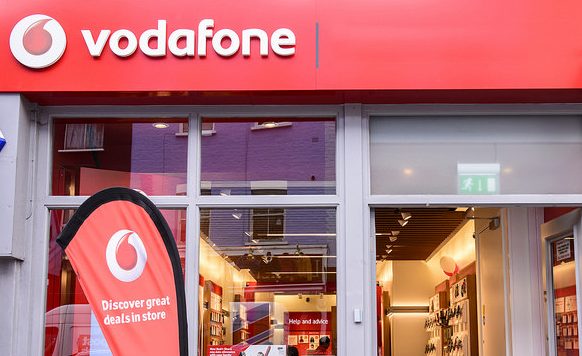
Mobile operator Vodafone has recently begun to introduce a new space-saving “Quad Stack” design of 5G mast across parts of Greater London, which is not only intended to help improve mobile broadband speeds but could also contribute to actually reducing the number of masts and the number of street-level equipment cabinets in some areas.

Let’s face it, mobile masts aren’t exactly the most popular items of street furniture these days, particularly when it comes to those larger towers that are more typically found in remote rural areas. But in urban locations, it often makes sense to use more compact and discreet monopoles, particularly with so many big buildings around (not all such buildings are viable for alternative rooftop sites) that can otherwise seriously impede an operator’s signal.

The difficulty with smaller monopole style masts is that, in order to spread your coverage, you often have to build quite a few of them and fitting everything you need to deliver a good service on top of such a relatively small space is extremely difficult.

The good news is that Vodafone’s engineers have recently been introducing a new “Quad Stack” mast design. Unlike older masts (single stacks), just one quad stack mast can support 2G, 4G and 5G together, thanks to the latest construction techniques and space-saving technology. For example, multiple fibre optic cables can now be combined into a single ribbon cable with a compact connector, while the street cabinets have also been rationalised and reduced in number.

At present, Vodafone only appears to have been deploying these across the Greater London area, as they have been designed to withstand the wind shear typical to that part of the country, although you may well start to see them popping up elsewhere soon too.

However, we have our doubts about whether these will actually lead, as Vodafone suggests, to an overall reduction in mast numbers across urban areas. This is because mobile operators are increasingly adopting higher mobile frequencies, which tends to require such networks to increase their density in order to counteract for the weaker signals of such bands. In that sense, the new masts may at least help to keep the number of such sites down, rather than allowing them to grow.

Mobile Operator O2 UK Quietly Discontinues Pay As You Go Data SIMs

Some customers of O2 UK’s (Virgin Media) Pay As You Go Data SIMs (mobile broadband) have recently been surprised to find that they can no longer top their plans up with extra data. The reason for this appears to be because the mobile operator quietly removed them from sale during early August 2024.

Just to recap. O2’s PAYG Data SIMs allowed customers to choose from a selection of plans, each with a different allowance and expiry period. For example, you could pay £3 for 1GB (GigaByte) but that had to be used within a 24-hour period, or alternatively you’d pay £10 for 2GB lasting 90 days, then £20 for 8GB lasting 90 days or £30 for 12GB that lasted for 12-months.

The plans had some advantages for those who only needed infrequent access to data, and you can still buy preloaded O2 data SIMs via Amazon, but by modern standards they perhaps weren’t particularly good value for money and these days data-only SIMs can feel a bit redundant (i.e. it’s often cheaper to simply buy a regular mobile SIM and just not use the calls/texts side).

However, if you visit the same page on O2’s website today, then the operator simply says, “we no longer sell data only SIMs for Pay As You Go” and directs customers to take one of their Pay Monthly or regular PAYG mobile SIMs instead (oddly this is done alongside the picture of a 5G SIM, but PAYG on O2 doesn’t support 5G). Credits to Julian for spotting this development.

Virgin Media O2 Says UK Gov Must Get Serious with Tackling Fraud

Broadband ISP and mobile giant Virgin Media and O2, which invests millions in counter fraud measures each year and blocked more than £250m worth of fraud in 2023, has called on the UK Government to take “urgent action” to address the “epidemic” levels of fraud. The ISP is seeking stronger police powers and the appointment of a dedicated minister.

The telecoms operator highlights the example of how its own investigation team spent more than two years building a compelling case against a large-scale organised crime gang targeting UK consumers over a multi-year period. The operator uncovered evidence which linked around £250,000 worth of fraudulent activity and hundreds of stolen devices to two individuals in the UK.

However, despite the operator’s best efforts, the case is said to have “stalled“, and no charges have been brought. Meanwhile, the suspects who have defrauded many hundreds of victims continue to walk free, with VMO2’s intelligence team indicating this fraud ring continues to operate and target the public.

The operator has presented detailed evidence of systematic fraud by organised criminals to police forces on more than thirty occasions over the past two years, all of which it believes offers a realistic prospect of prosecution. But only two of them are understood to have led to a criminal prosecution. Meanwhile, the Fraud Strategy launched a year ago under the previous government has not done enough to empower police forces to prevent or prosecute fraudsters, with VMO2 saying that “consumers and businesses [have been] left to fend for themselves“.

The telecoms giant is thus calling on the government to appoint a dedicated minister for fraud and overhaul how the police tackle it by creating a single centralised, specialised national body that handles all instances of fraud – backed with the necessary resources and focus to drastically cut this pernicious cross-border crime.

Rob Orr, COO at VMO2, said:

“Fraud is at epidemic levels, with organised gangs of fraudsters operating professional call centres which relentlessly target Brits every second of every day.

We’re constantly building our defences higher and sharing compelling evidence of what these gangs are up to but with no real deterrent in place, these criminals can repeatedly steal free from the threat of prosecution.

Despite their best efforts, dedicated police officers are handcuffed to working through a patchwork of local forces, many of which lack the specialist skills and teams needed. Too often, this leaves them unable to act – even on slam-dunk cases.

To help turn the tide, we urgently need Government to appoint a minister responsible for fraud and address the structural problems by creating a centralised, specialised and properly resourced national body to handle all instances of fraud to tackle this complex, cross-border crime.”

The operator also highlights a new Freedom of Information Request, which reveals that, on average, there were only 84 fraud convictions originating from each police force last year and one police force serving a population of more than half a million people was responsible for just 23 convictions. Three forces have no officers dedicated to investigating fraud.

Similarly, just 6% of cases reported to Action Fraud ever reached police forces for investigation in the 2023/2024 financial year and for those that did, few resulted in charges, with the latest Home Office data revealing a 10% deduction year-on-year. This is despite nearly 69% of Brits reporting that they’ve been targeted.

VMO2 Calls on the Government to:

  • Equip the new body with sufficient new officers to better match the number of fraud cases – at least doubling the existing commitment in the Fraud Strategy (i.e. from 400 to 800);
  • Invest more to tackle persistent, criminal gangs that are committed to defrauding UK consumers;
  • Appoint teams to work closely with businesses, with officers assigned to specific sectors like telecoms, to reduce consumer and business fraud; and
  • Appoint a dedicated fraud minister with oversight of this organisation. Ensure they develop more ambitious targets to tackle fraud and are held to account through annual progress reports.

UK ISP Fibrus Launch Black Friday Discounts on Full Fibre Broadband

Alternative network provider Fibrus, which is deploying a new 2Gbps speed Fibre-to-the-Premises (FTTP) broadband network across rural parts of Cumbria in England and Northern Ireland, has kicked off some early Black Friday discounts that will be available for new customers to take for the next few weeks.

The operator, which has already built their network to cover 375,000 UK premises and claims to be “fully funded to complete” their roll-out plan for 500,000 premises in the near future (here), typically sells their headline packages with a minimum contract term of 24-months, including both free installation and a bundled Amazon eero Wi-Fi 6 router.

NOTE: Depending on your chosen speed, you’ll receive one Amazon eero 6+ (150Mbps) router, two eero 6+ (for 500Mbps) or two Pro 6E routers for 1Gb and 2Gb speeds.

Prices now start at just £19.99 per month (£39.99 after 24-months) for an average download speed of 159Mbps (34Mbps upload), which rises to £24.99 (£45.99 thereafter) for 518Mbps (104Mbps) and just £34.99 (£59.99 thereafter) for their 984Mbps (310Mbps upload) tier. The provider also offers a 2Gbps service in some areas from £129.99 per month (£199.99 thereafter).

Virgin Media O2 Partners with StartUp, GoDaddy, and egg to Help UK SMEs

UK ISP Virgin Media Business (VMO2) has today announced that they’ve launched a new Small Business Partnerships initiative with several key brands including Virgin StartUp, GoDaddy, and egg, to bring exclusive offers to small business based broadband and mobile customers.

For example, Virgin StartUp will offer a 50% discount to VMO2’s customers on their 12-topic on-demand video course, ‘How to Build a Business’, which covers key steps from customer research to brand development and investor readiness, saving customers £25 (RRP £50). Similarly, GoDaddy is offering a 40% discount on all their Website Builder Plans.

In addition, egg’s exclusive offer for VMO2 customers includes savings of up to £730 on EV charging points for employees and customers and £500 off a 6-28 solar panel solution. On the flip side, VMO2 said that small business customers of Virgin StartUp, GoDaddy, and egg will be able to get 6 months Half Price on all their Voom broadband (Solus or Bundle) plans, as well as 25GB of mobile data for £10 on SIM only (24-month contract).

Chris Holmes, Director of SOHO at VMO2, said:

“Virgin Media O2 are committed to helping businesses of all sizes stay connected, competitive, and ready for the future. By partnering with Virgin StartUp, GoDaddy, and egg, our all-new Small Business Partnerships initiative ensures our customers have access to great discounts on industry-leading technology, expert guidance, and strategic resources. In turn, their customers can also access these benefits from us, helping them seize new opportunities and achieve further growth. We’re excited to build on these partnerships in the future and to continue powering small businesses across the UK, providing them with the tools they need to succeed.”

Full Fibre UK ISP BeFibre Launch 2.3Gbps Broadband and 18-Month Terms

Merseyside-based alternative broadband operator and UK ISP BeFibre, which sells packages to homes and businesses via FullFibre Limited’s Fibre-to-the-Premises (FTTP) network, has today refreshed their prices, shifted from 24-month to 18-month contract terms and launched a new 2.3Gbps speed package.

The changes mean that BeFibre’s entry-level 150Mbps symmetric speed package, for example, now costs slightly less at £24 per month on both a 12 or 18-month minimum contract term (£30 thereafter), which includes free setup, a free WiFi 6 router and no mid-contract price hikes. But you can now also get a new 2.3Gbps package on their network from £25 per month for the first 3 months and then £50 thereafter.

NOTE: FullFibre Ltd’s network currently reaches 380,000 premises (RFS) across England and is available to parts of Derbyshire, Essex, Gloucestershire, Greater Manchester, Herefordshire, Lancashire, Leicestershire, Lincolnshire, Merseyside, Northamptonshire, Nottinghamshire, Shropshire, South Yorkshire, Staffordshire, Warwickshire and Worcestershire.

The provider also offers a 30-day guarantee, which means that if you aren’t happy within that first month of service, then “you can leave with no cancellation fees“. The latest round of price discounts on their packages will be available for new customers to take until 2nd December 2024.