

Original article ISPreview UK:Read More
The UK Government’s Department for Science, Innovation and Technology (DSIT / DCMS) has today proposed “tougher fines and prison sentences” for those who damage subsea infrastructure essential for UK broadband access and trade, with consultation planned to take place later this year.
Damage to submarine cables is sadly not all that uncommon. According to the United Nations ICPC (here), an average of 150 to 200 faults occur globally each year and require about three cable repairs per week (97% of such breaks are NOT malicious). In addition, it usually takes a few weeks to fix a break, but this depends upon the type of break, its depth, weather conditions and various other factors.
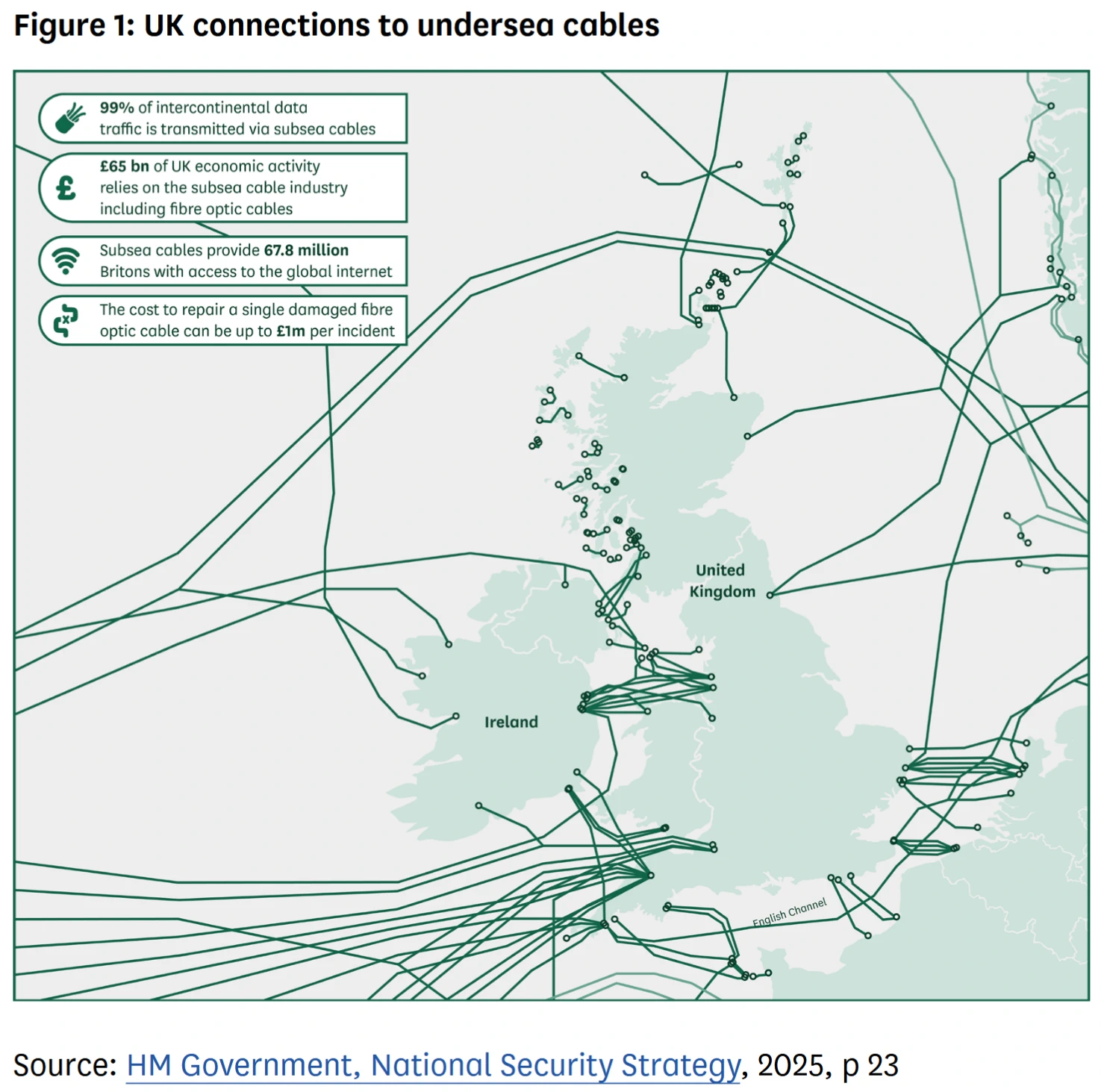
Most of the breaks that occur are caused by accidents due deep sea fishing trawlers, as well as ships accidentally dragging their anchor over them. Not to mention abrasion, equipment failure or marine life deciding to take a nibble (the latter is only really an issue for smaller / older cables that haven’t been buried). But over the past few years the act of deliberate sabotage has also become a real problem (example).
Unfortunately, the existing Submarine Telegraph Act 1885 is weak and can only impose a £1,000 fine, which isn’t a deterrent against costly cable damage accidents related to negligence or sabotage, particularly those that occur in the gray zone of conflict (e.g. the deliberate use of civilian vessels to cause damage). Not to mention the difficulty of extending any law beyond the UK’s own territorial waters and the lack of resources to protect so many cables.
However, improvements are being made in terms of monitoring (Distributed Fibre Optic Sensing) technologies and military measures, but today the focus is more on the side of supportive legal measures. Previous inquiries have found that the UK has “plenty of cable routes and good repair processes for business-as-usual breakages“, but that the rules need to be toughened to help cope with today’s heightened threat environment (here).
What is the government planning?
Speaking at the Royal United Services Institute (RUSI) today, the UK telecoms minister, Liz Lloyd MP, set out plans to consult on replacing 140-year-old legislation to make the law clearer, and much harder to evade – with tougher fines and prison sentences for vessel owners and operators that intentionally or recklessly damage cables.
She also highlighted that the Government is considering new security obligations on cable owners and operators, ensuring they take the “necessary steps to prevent, detect and respond to security compromises in a consistent and timely manner“.
New emergency powers to direct businesses to protect this infrastructure will also be included in the proposals, which would strengthen government’s ability to respond to major subsea cable incidents and minimise disruption to UK connectivity. The proposals will be set out in detail through a white paper later this year.
Take note that acts of sabotage clearly linked to a hostile state can already carry a risk of life imprisonment for the most serious cases, but proving that can be difficult.
Telecoms Minister, Liz Lloyd, said:
“The UK already has strong protections in place for our subsea cables, but in a more uncertain world we cannot stand still.
As hostile activity by Russia and others grows, protecting these cables matters more than ever for our economy, security and daily lives. That is why we plan to go further with tougher penalties for reckless damage, stronger security obligations and new powers to respond quickly when incidents happen.
True resilience depends on having a healthy thriving telecoms sector, and government must play an active role in creating the conditions for commercial success. By building a strong domestic industry we don’t just protect infrastructure, we strengthen the UK’s position as a global centre for digital trade.”
The Minister also pointed to existing plans to support further investment into cable upgrades through “common-sense regulation” that “supports growth rather than holds it back” – pointing to exemptions on environmental red tape for the laying, maintenance and removal of subsea cables in deep waters, where the impact on marine life is claimed to be “extremely limited“.
As we’ve said before, cutting lots of subsea cables within the same short period of time (i.e. to cause maximum disruption), while a risk, is something that would be both extremely difficult to completely prevent and to actually carry out. On the other hand, the more such attacks take place, the greater the strain on limited resources for repairs, which risks causing a build-up of cumulative delays and thus connectivity problems.
The catch for an aggressor is that the same sort of attacks and strategies could then also be used against them. The fact that so much international trade is carried over the internet also means that other countries will be harmed by such an activity, which in a conflict may end up including the attacking state or its allies to some extent (i.e. directly or indirectly).
Suffice to say that tougher laws are needed and will be welcomed, although it will take more than that to create a truly effective deterrent against deliberate sabotage. As an island nation we have good reason to be highly protective of our subsea links, not only for fibre but also energy etc.