

Original article ISPreview UK:Read More
Last night’s FIFA World Cup 2026 last-16 match between England and Mexico, which saw us walk away with the win after 3 goals (Mexico scored 2), caused an abnormal increase in broadband and mobile traffic across the small hours of the morning as many people stayed awake to watch the event.
The high-stakes match at the Estadio Azteca (stadium) was originally scheduled to kick off at 1am this morning, but ended up being delayed by an hour due to severe thunderstorms and lightning in the Mexico City area. Matches that take place outside of normal working hours don’t usually tend to move the fixed broadband traffic dials all that much because people usually tune-in via traditional TV signals.
On the other hand. The 2am to 4am time window is a particularly unusual one for a match like this because it’s a time when we’d normally expect internet traffic to be in a fairly smooth free fall toward its lowest point of the day at around 5am. After that, traffic levels usually start to pick up as people gradually begin waking up for work and the usual daily routine.
Data from the London Internet Exchange (LINX), which handles a large chunk of UK and global traffic through their switches via around 900+ members (ISPs, mobile and CDN providers etc.), showed that the small hours of Monday morning still had a decline towards the usual daily low. But it’s also clear that traffic was quite a bit above normal for the 2am to 4am window and even showed some notable peaks. You can see how this morning compared with prior days below.
LINX Traffic Between 3rd July to 6th July 2026 (9am)
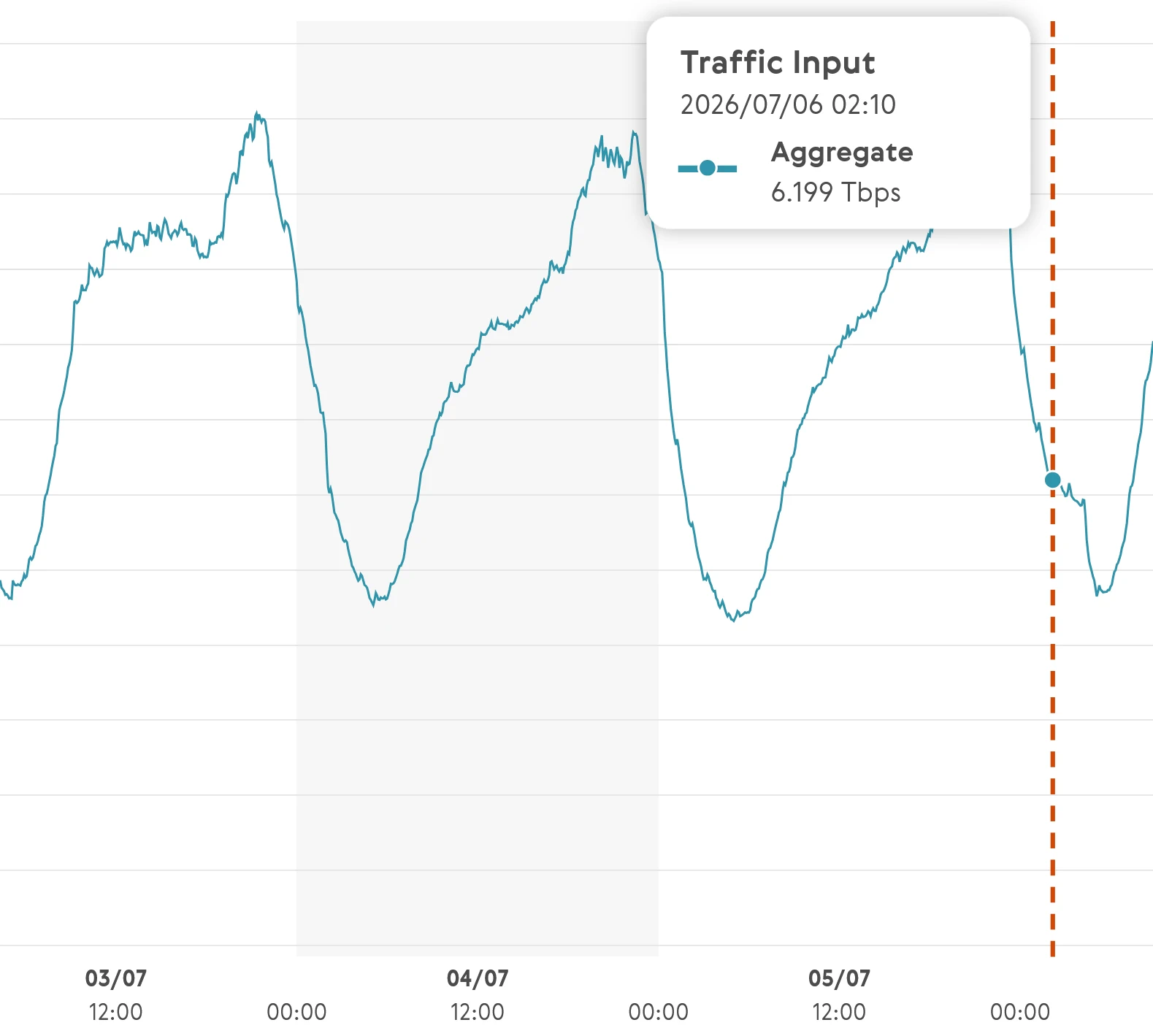
Take note that internet providers use sophisticated Content Delivery Networks (CDN) and systems to help manage load from events like this, which caches popular content closer in their network to end-users (i.e. improves performance without adding much strain to external links). But the levels seen this morning, against a background of generally low network load, probably wouldn’t have caused any providers much concern.
At present we only have data from LINX, but we’re hoping to get some additional reports from various broadband and mobile providers this week and will add their feedback below. But in general, given the time period, the biggest impacts for fixed broadband usually come from streaming platforms like ITVX, while mobile traffic is generally boosted via social media engagement (most mobile devices will be connecting via WiFi at home, so will also harness fixed broadband).