CityFibre secures £2.3bn in funding to fuel broadband network expansion | Total Telecom

Original article Total Telecom:Read More

Press Release

CityFibre, the UK’s largest independent full fibre platform, has reached agreement with its shareholders and existing lenders on a major £2.3bn financing round, accelerating its next phase of growth.

The financing includes £500m in new equity secured from CityFibre shareholders, Infrastructure at Goldman Sachs Alternatives, Antin Infrastructure Partners, Mubadala Investment Company and Interogo Holding, underscoring their continued commitment to CityFibre’s long term strategy and the company’s role in providing critical digital infrastructure across the UK.

CityFibre has also agreed a committed £960m expansion of its existing debt facilities, supported by lenders including ABN AMRO, BBVA, Crédit Agricole CIB, ING, Intesa Sanpaolo IMI CIB, Lloyds, the National Wealth Fund, NatWest, SEB and Société Générale. The facility will support CityFibre’s continued network investment and enable it to rapidly connect hundreds of thousands of new customers across its nationwide network.

An accordion facility of £800m is also being made available to help drive CityFibre’s continued expansion through the acquisition of full fibre network assets. This facility will be used to finance the company’s M&A pipeline and cement its position as the sector consolidator.

Greg Mesch, CEO of CityFibre, said: “This round of financing will supercharge CityFibre’s next phase of growth, as we consolidate the altnet sector, accelerate the pace of customer connections and unleash the full power of our market-leading 10Gb XGS-PON network, for the benefit of all our partners, their customers and for the UK economy.

“There is huge opportunity ahead for CityFibre and it is testament to the success of the company that we have such strong backing from our lenders and shareholders. This multi-billion-pound investment into critical digital infrastructure will deliver significant benefits across the UK, helping to realise potential and unlocking economic growth.”

This investment marks a significant moment in upgrading the UK’s digital infrastructure. It will deliver world-class infrastructure and services to millions of consumers and businesses and provide the digital foundations for the UK’s economic growth for decades to come.

Chancellor of the Exchequer, Rachel Reeves, said: “Today’s announcement shows Britain is attracting billions of pounds of investment, including through the National Wealth Fund, driving growth across British businesses.

“Investing in our digital infrastructure is key to ensuring our economy is fit for the future. Through our Plan for Change we’re growing the economy by boosting investment in Britain and working hand in hand with businesses to create jobs, to put more money in working people’s pockets.”

Secretary of State for Technology, Peter Kyle said: “This investment in CityFibre is welcome news. It’s proof our telecoms industry is driving investment into the UK, as well as building the digital foundations that will serve generations to come.

“The success of the UK’s network providers will help accelerate the rollout of gigabit-capable broadband to millions of homes and businesses across the country. I hope to see even more success stories like this one, because this sector is critical not just to improving internet speeds, but to transforming quality of life for communities and creating opportunities in every part of the country as part of our Plan for Change.”

Over the past 12 months, CityFibre has announced its first full year of profitability1, launched Sky’s full fibre and Gigafast+ services across CityFibre’s nationwide network, completed the integration of Lit Fibre, announced the acquisition of Connexin’s full fibre infrastructure2 and reached more than 4.5 million premises with its full fibre network, over half way to CityFibre’s milestone of 8 million premises.

CityFibre is advised by Evercore on the agreement, which is subject to final legal approval.

Keep up with all the latest telecoms news with the Total Telecom newsletter

Also in the news:
US judge rules Huawei must face charges of fraud and racketeering
Optus ditches football rights to focus on telecoms
Nokia launches digital twin platform Enscryb to digitalise energy sector

EXA Infrastructure Deploys New Subsea Fibre Optic Route from London to Europe | ISPreview UK

Original article ISPreview UK:Read More

London-registered network operator EXA Infrastructure, which in 2021 was acquired by investment firm I Squared Capital, has today confirmed the completed deployment of a new 1,200km fibre optic network route that will connect London in England to Frankfurt, Amsterdam and Brussels.

The project reflects a new consortium submarine fibre cable, where EXA is the sole telecom consortium member, responsible for providing Landing Party and backhaul services. The new 1,200km route includes 1,085km of new low-loss G.652D terrestrial fibre for end-to-end connectivity and a 115km subsea build, which runs from Margate (UK) to Ostend (Belgium) utilizing ultra-low-loss G.654C cable.

The two new landing stations – Exa’s 21st and 22nd globally – further strengthens its growing network spanning the U.S. East Coast, Western Europe, and the Mediterranean. The project will also help to enhance Europe’s digital infrastructure with upgrades to existing In Line Amplifier (ILA) facilities across the UK, Belgium, and the Netherlands.

Steve Roberts, EXA’s SVP Strategic Network Investments, said:

“This is a real milestone for robust connectivity options in Europe, and includes the first new subsea cable on this complex corridor – the North Sea – in 25 years. This new route complements our investment in the Channel Tunnel delivering scalable, modern and optimized fibre paths between key FLAP hubs.”

Ciaran Delaney, COO at EXA Infrastructure, added:

“This has been a complex and challenging build.. The regulatory landscape in Europe plus the North Sea’s challenging seabed conditions demanded ‘in region’ expertise in the various jurisdictions plus sophisticated installation techniques particularly on the wet segments to install and protect the system from future interruption to service. At EXA Infrastructure, we have the right expertise and experience to overcome the most complex and challenging situations to in this case, deliver the next-generation connectivity across Europe.”

At the time of writing we don’t yet know how much this specific project will cost, but it is being funded through part of the €395m they’ve invested into expanding their network since launch in 2021. The project mentioned above actually started in 2021 too, and today’s news represents the completion of that effort. All routes are thus now available to their customers.

In terms of performance, the London to Amsterdam route has an estimated latency of 6.2ms and London to Frankfurt is estimated at 9.4ms. In terms of capacity throughput, the new routes can support over 5Pb/s (Petabits per second).

CityFibre Agrees £2.3bn Funding Deal to Boost UK Full Fibre Broadband | ISPreview UK

Original article ISPreview UK:Read More

Digital infrastructure builder CityFibre has today announced that they’ve reached a crucial UK funding agreement worth £2.3bn (mix of debt and equity). The deal will support the ongoing deployment of their new 10Gbps capable Fibre-to-the-Premises (FTTP) broadband network and also drive a new wave of consolidation.

Just to recap. CityFibre has already deployed their full fibre network to cover around 4.5 million premises (inc. 550k customers) and they’ve long aspired to reach up to 8 million UK premises – representing c.30% of the UK. But their original target of hitting that by the end of 2025 will be missed, and they’ve also been facing some of the same pressures as many other networks (e.g. high interest rates, rising build costs and competition).

NOTE: CityFibre is owned by Antin Infrastructure Partners, Goldman Sachs, Mubadala Investment Company, Interogo Holding etc. The network is supported by UK ISPs such as Vodafone, TalkTalk, Zen Internet, Sky Broadband and more, but they aren’t all live or available in every location yet.

In response, the operator has already made some redundancies and shifted their strategy, which sees them focus less on new network builds and more on growth via mergers and acquisitions (M&A), as reflected by the deals to acquire Connexin (here) and Lit Fibre (here). Not to mention putting more effort into commercialisation in order to encourage take-up by consumers, which is where the recent deal with Sky Broadband may help (here).

According to industry analyst James Ratzer – in 2025 and beyond, it’s expected that CityFibre will likely only build FTTP out to c.300k homes per annum organically, largely to meet their state aid backed Project Gigabit contracts. But the operator still aspires to add around 1 million premises each year, which suggests c.700,000 will be coming from the acquisition of other networks; something they’ve been very vocal about (here).

However, the operator’s existing funding had nearly run out, and they needed more in order to deliver on both their existing network expansion and their new consolidation strategy. Suffice to say that today’s agreement is aimed at tackling both of those issues.

What’s in the funding deal

The new financing includes £500m in new equity secured from CityFibre shareholders – Infrastructure at Goldman Sachs Alternatives, Antin Infrastructure Partners, Mubadala Investment Company and Interogo Holding.

On top of that, CityFibre has also agreed a committed £960m expansion of its existing debt facilities, supported by lenders including ABN AMRO, BBVA, Crédit Agricole CIB, ING, Intesa Sanpaolo IMI CIB, Lloyds, the National Wealth Fund, NatWest, SEB and Société Générale. The facility will support their “continued network investment and enable it to rapidly connect hundreds of thousands of new customers“.

Finally, an accordion facility of £800m is also being made available to help drive CityFibre’s continued expansion through the acquisition of full fibre network assets. “This facility will be used to finance the company’s M&A pipeline and cement its position as the sector consolidator,” confirmed the announcement. This is a feature of loan agreements that allows them to increase, as required, the total amount of debt available under an existing facility.

Greg Mesch, CEO of CityFibre, said:

“This round of financing will supercharge CityFibre’s next phase of growth, as we consolidate the altnet sector, accelerate the pace of customer connections and unleash the full power of our market-leading 10Gb XGS-PON network, for the benefit of all our partners, their customers and for the UK economy.

There is huge opportunity ahead for CityFibre and it is testament to the success of the company that we have such strong backing from our lenders and shareholders. This multi-billion-pound investment into critical digital infrastructure will deliver significant benefits across the UK, helping to realise potential and unlocking economic growth.”

Chancellor of the Exchequer, Rachel Reeves, said:

“Today’s announcement shows Britain is attracting billions of pounds of investment, including through the National Wealth Fund, driving growth across British businesses.

Investing in our digital infrastructure is key to ensuring our economy is fit for the future. Through our Plan for Change we’re growing the economy by boosting investment in Britain and working hand in hand with businesses to create jobs, to put more money in working people’s pockets.”

The risk in all this is that consolidating alternative networks tends to be a slow, complex and costly process – particularly with many altnets still holding an inflated idea of their own asset values. CityFibre’s strategy around this thus remains somewhat unproven, and any new funding deal they strike now will be subject to less favourable conditions than they had before (e.g. interest payments will be higher).

Put another way, this may not be the last funding deal they’ll need, which means that some of the same underlying funding challenges could still resurface again in the future. The operator also faces other challenges, such as from the recent instability at one of their largest ISP partners, TalkTalk, which currently accounts for c.150k customers via CityFibre and is struggling in ways that could risk wider harm in the future (here).

Despite this, CityFibre has succeeded in growing a good level of scale and is one of the reasons why established giants, like Openreach (BT) and Virgin Media (O2), have had to accelerate their own FTTP plans in order to avoid losing too much market share. Suffice to say, it’s important not to underestimate the profound impact they, and others, have had on the market and will hopefully continue to have into the future.

Study Claims 60 Percent of UK Broadband Users are Out of Contract | ISPreview UK

Original article ISPreview UK:Read More

New research from Broadband Genie and OnePoll, which surveyed a total of 3,997 broadband bill payers in the UK between July and November 2024, has revealed that 60% of respondents are out-of-contract – varying between a peak of 64% for those aged 65+ and a low of 55% for those aged 18-24. But many of these could be paying extra by failing to switch ISP.

However, when asked why such people hadn’t switched ISP, some 45% of over-65s and a “large proportion in other age groups” (sadly we didn’t get the full results) said it was because they “like their provider“, which seems like a fair enough reason.

NOTE: Data from TOTSCo on actual switching reveals that, in the past c.10 months, a total of around 1.3 million UK consumers did switch fixed home broadband provider.

The survey assumes that those out-of-contract will be “overpaying“. But while this may be true for the majority of respondents, which will be using one of the biggest providers where variable discounts for new and re-contracting customers are common, there will be others with smaller ISPs – and those on monthly terms from the start – where pricing is kept flat and annual hikes don’t occur.

The other issue is that not all of us choose an ISP based purely on price. Some providers provide features and levels of service or support that others do not, which can also be a consideration. So while it’s good to switch and the regulator’s One Touch Switching (OTS) process has made that a lot easier, it’s important to remember that it’s not always about the savings you can make.

Percentage of bill payers out of contract by age

Age category % out of contract
18 – 24 55%
25 – 34 57%
35 – 44 60%
45 – 54 61%
55 – 64 61%
65+ 64%
Average 60%

Faulty Three UK Mast Disrupts Mobile Connectivity in Handforth for 6 Weeks | ISPreview UK

Original article ISPreview UK:Read More

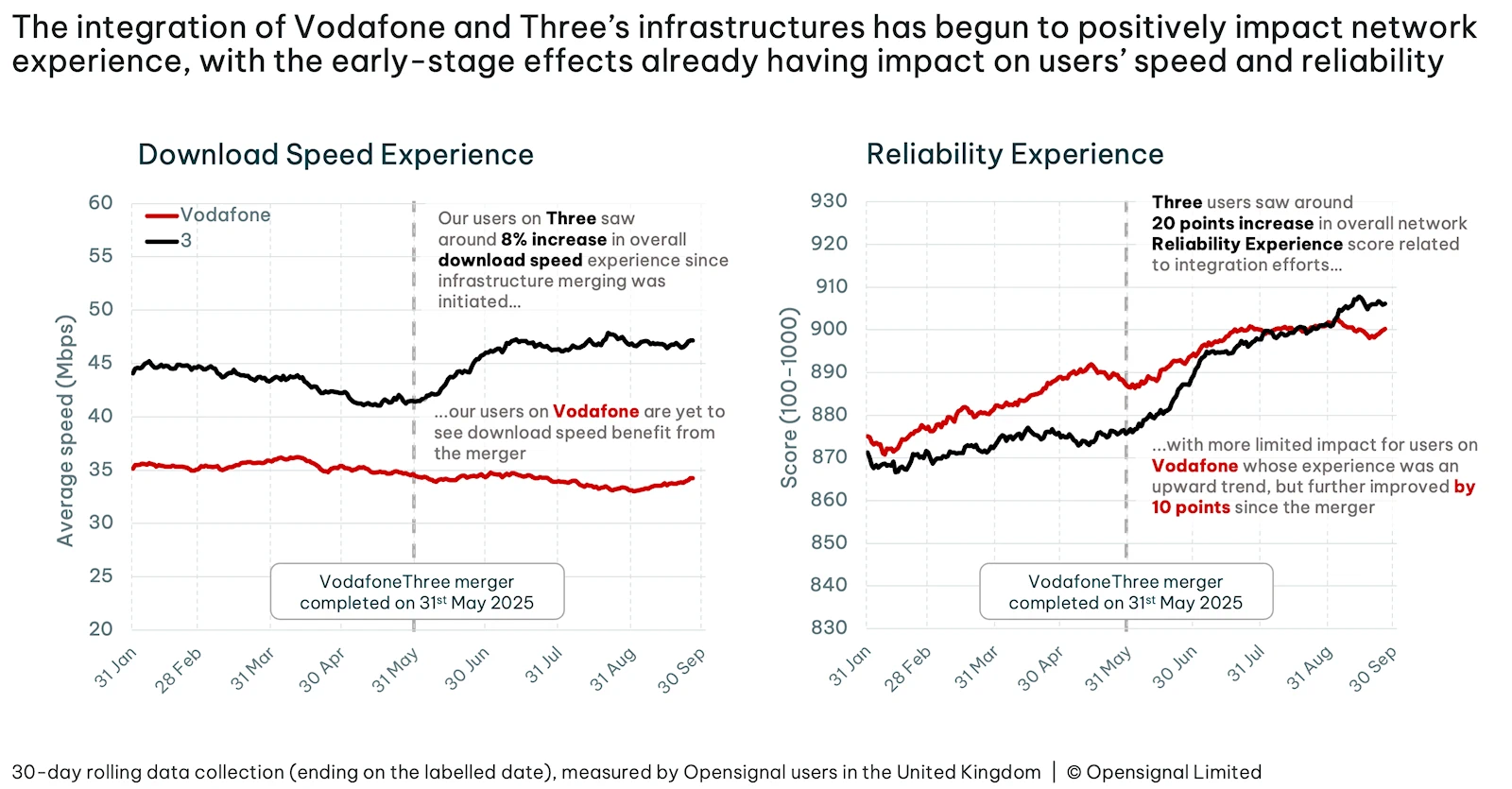
Customers of mobile network operator Three UK (VodafoneThree) in the Cheshire (England) town of Handforth, which is home to nearly 7,000 people, have complained to ISPreview that they’ve been suffering from disruption to their calls and data (mobile broadband) connectivity for over a month after the local mast developed a fault.

The existence of a problem, which has resulted in poor (sometimes unusable) call signals, extremely slow data speeds (sub-1Mbps and sometimes as low as 0.1Mbps) and poor latency (between 100 to 500ms+), has been confirmed by support agents to customers (including via MVNO providers like Smarty). But until now locals have not been provided with any information about the cause or when it might be resolved.

Three UK has now confirmed to ISPreview that the problem, which appears to have started at around the beginning of June, relates to one of their local mast sites that has gone down. However, the operator’s engineers have struggled to reach the site due to structural issues with a roof where it’s located, which must be resolved before the network can be fixed.

In addition, there was apparently a separate and unrelated issue at another nearby site earlier in June 2025, which also impacted 4G and 5G signals in the area for a time, but this has recently been resolved. We have not been told what the cause of that issue was or how long it lasted.

A Three spokesperson said:

“A number of customers in Handforth may be experiencing issues with our network due to an issue at our nearby site. We are currently unable to access the site due to structural issues which make it unsafe to work on. Customers should still receive signal from surrounding sites, although it may not be the usual service that we expect to provide.

We are working to fix the problem as soon as possible and apologise for any inconvenience caused.”

Three recommends that customers who continue to experience issues should contact their support team to report the problem (calling 0333 338 1001), although this seems like an odd request given how they already know about it. Sadly, Three UK could not offer a more specific ETA for the fix.

Openreach Testing Relaxed Rules for UK Exchange Closure Pilot | ISPreview UK

Original article ISPreview UK:Read More

Network operator Openreach (BT) are testing a relaxation of their FTTP broadband Priority Exchange Stop Sell rules and Copper line re-arrangement in the Kenton Road Exchange area. This is one of the three exchanges taking part in their initial pilot project to test approaches, before eventually closing c.4,600 of their legacy exchanges from 2030 onwards.

At present Openreach operates around 5,600 UK exchanges, but only c. 1,000 of those are used to provide nationwide coverage of modern “fibre broadband” based services (FTTC, FTTP etc.) – the Openreach Handover Points (OHPs). However, the rollout of full fibre (FTTP), combined with the retirement of copper lines and legacy services (ADSL, WLR etc.), will make it economically unviable to support both the old and new exchanges.

NOTE: Openreach previously predicted that, come 2025, the number of copper broadband customers being served by the old 4,600 exchanges will fall to just 1 million.

The operator thus has a long-term plan for closing the other 4,600 exchanges – known as the Exchange Exit Programme, which starts with their initial pilot of 3 exchanges (ongoing at Deddington, Ballyclare and Kenton Road) and then extends to an initial closure of 105 “priority exchanges” by 2030, with the rest gradually following over later years.

The highly complex process to close an exchange and migrate customers typically takes around 4-7 years (depending upon the complexity of each exchange) – starting with a Stop Sell of old products and eventually ending with everything being switched off (Openreach and ISPs then remove their physical equipment over the following few months).

What’s happening in Kenton Road?

The Kenton Road exchange in Greater London (Boroughs of Harrow and Brent) serves around 9,500 premises and is currently due to reach the final product switch-off stage on 30th November 2025 (existing equipment will then be removed / decommissioned by 31st May 2026). At present broadband and phone providers are thus still busy migrating customers across from copper to all-IP (internet protocol) based services.

However, Openreach has decided to tweak their approach to the Kenton Road exchange in order to better understand how other measures might assist in the conversations with customers, which could help in migrating lines before the November deadline.

At present ISPs on the exchange can only move customers to FTTP broadband lines where they’re available on the network. But Openreach are introducing a temporary change that will give ISPs the option to migrate customers to their SOGEA lines as well (i.e. standalone FTTC broadband on copper lines).

The above approach is considered to be an easier sell to end customers, as they won’t normally need an engineer’s appointment (depending on what kit they already have at home). But Openreach’s system will only allow these SOGEA orders between 1st August and 3rd November 2025, which should then be fulfilled by mid-November – just before the official switch-off date for the exchange.

Finally, for copper re-arrangement, Openreach are looking to understand more about which lines cannot move to a more modern all-IP product or even be ceased by the end of November (a very small number of lines). The most likely examples of this could be those edge cases, such as non-responsive customers with incompatible telecare alarms (vulnerable users).

The operator will look at these on a case-by-case basis and may consider re-arranging their copper lines to connect them to the nearby Kingsbury Exchange instead. The pilot is thus trying to consider the level of demand and viability of this approach (such re-arrangements can be complex and costly).

The purpose of any trial and pilot is to test and understand things like this, so it’s good to see Openreach testing how they’ll handle the most difficult cases, which will invariably only crop up toward the end of an exchange closure. All of this will help to inform their approach for the first big batch of 105 closures, which is due to follow the initial pilot.

UK Gov Boosts Eutelsat’s OneWeb LEO Broadband Satellites by £140m | ISPreview UK

Original article ISPreview UK:Read More

The UK Government has agreed to commit a further £140m (€163.3) of public investment to help Eutelsat grow and expand its constellation of OneWeb ultrafast broadband satellites in Low Earth Orbit (LEO). The funding will be combined with other investments, such as €750m from France (the French State), to support a total capital increase of €1.5 billion (£1.29bn).

Just to recap. OneWeb (aka – Eutelsat OneWeb), which was originally rescued from bankruptcy by the UK government and Bharti before later becoming a part of Eutelsat – with concessions (here), currently has 654 small (c.150kg) first generation (GEN1) LEO platforms in space – orbiting at an altitude of 1,200km (c.600 of them for coverage and the rest for redundancy).

NOTE: Eutelsat has its HQ in Paris, while OneWeb is a subsidiary operating commercially as Eutelsat OneWeb, with its centre of operations remaining in London. BT and others have previously worked with OneWeb on several UK rural broadband trials (here and here).

The OneWeb network was finally completed in March 2023 (here), promising both ultrafast broadband speeds and fast latency times. But a further 15 satellites (plus one GEN2 prototype) were then launched in May 2023 to add “resiliency and redundancy to the network” (here) and then another 20 more in October 2024 (here).

The new funding announced yesterday is intended to help secure the execution of Eutelsat’s long-term strategic vision, including for its OneWeb based network of LEO broadband satellites, which have typically been more focused on business and government connectivity (some rural communities have also been connected via distributed WiFi solutions).

The expectation is that this will support the launch of new services, the development of future GEN2 satellites and also underpin Eutelsat’s position on the EU’s own LEO focused IRIS 2 programme – the public-private partnership aiming to build a multi-orbit constellation delivering secure communication services to the EU and its Member States.

Peter Kyle, Secretary of State for DSIT, said:

“From checking the weather forecast on our phones to navigating with GPS in our cars, satellites underpin industrial activity worth £364 billion to the UK economy. But their critical role extends far beyond economic growth. As our adversaries increasingly use space technologies to harm us, resilient satellite connectivity has become essential to our continent’s national security. This investment reflects our commitment to support the development of these critical technologies and maintain an important stake in the global satellite communications sector.”

Joint UK-France Leaders Statement

We are committed to protecting our Critical National Infrastructure that underpins our thriving economies. Satellite connectivity is strategically important to Europe’s security and resilience and the UK’s investment in the Eutelsat Group is a demonstration of our commitment to this important technology, alongside the French Government and other existing shareholders.

The UK will thus join, prorated to its current stake, the capital increase led by the French State and other existing shareholders of Eutelsat announced on June 19 – taking the total amount of capital raised to €1.5 billion. In the context of European Space Projects, we welcome UK suppliers bidding for supply chain commercial contracts when conditions are met.

We will also work towards a resilient terrestrial alternative to Global Navigation Satellite Systems.

The mention of GNSS at the end is something that the UK Government has long envisaged for future satellites under the OneWeb constellation, although thus far it’s yet to materialise. But OneWeb did originally plan to launch another 1,280 satellites in the future (funds allowing), which were expected to reflect a GEN2 model that could sit in a higher Medium Earth Orbit (MEO) of 8,500km. The GEN2s are widely expected to have more data capacity (faster broadband speeds), support for 5G mobile and may, possibly, also introduce enhanced navigation and positioning features (GNSS).

However, the official funding announcement didn’t include a lot of detail on precisely how the new funding would be invested, but it does at least ensure that OneWeb will continue to be developed. The agreement, once fully approved, would leave the French State holding a stake of 29.65% of the capital and voting rights, while Bharti Space Limited, the UK Government, CMA CGM and FSP would respectively hold 17.88%, 10.89%, 7.46%, and 4.99% of the share capital and voting rights.

The deal naturally remains subject to the usual approvals by shareholders (meeting due to be held in Q3-2025) and regulators, which look likely to be achieved by the end of this year.

Openreach Speeds Up Proactive FTTP Broadband Upgrades by UK ISPs | ISPreview UK

Original article ISPreview UK:Read More

Network operator Openreach (BT) has tweaked their Proactive FTTP Upgrades process for ISPs, which allows providers to optionally reduce the normal lead time of 6 weeks. Just to be clear, it’s normally consumers that initiate an upgrade, but with proactive upgrades the initiator is your ISP (this can help with copper broadband [ADSL/FTTC/G.fast] to full fibre migrations).

Proactive migrations thus arise where your ISP proposes an upgrade to their new Fibre-to-the-Premises (FTTP) lines from your older broadband service and, at the same time, books an appointment for an Openreach engineer to carry out the upgrade (the end user is still able to confirm, reject or select a different appointment).

NOTE: Proactive FTTP upgrades are currently still free for ‘Standard’ migrations (i.e. typical home installs), but ‘Premium’ and ‘Advanced’ installs will attract a one-off £30 or £175 +vat connection charge respectively.

At present, this process typically has a 6-week lead time, but ISPreview understands that the new change (here) appears to have introduced the option for ISPs to opt into a shorter lead time of around 4-5 weeks.

High Court Rejects Phones 4u Appeal in Damages Claim vs O2, EE and Vodafone UK | ISPreview UK

Original article ISPreview UK:Read More

The long-running saga of former high street mobile phone retailed Phones 4u (P4u), which fell into administration in 2014 and claimed that key mobile operators (e.g. O2, EE and Vodafone) had colluded to drive them out of business, may have finally come to an end after the Court of Appeal in London dismissed each ground of the case.

In case anybody has forgotten. O2 decided not to renew their new connections contract with P4u in October 2012 and a year later this was extended to include their upgrades and SIM-only contract. On 7th August 2014 Vodafone UK gave written notice to P4u terminating its contract with effect from February 2015, and in September 2014 EE informed P4u by letter that it would not renew its agreement when it expired in 2015 either. P4U went into administration three days later.

The retailer later alleged that the mobile operators had colluded to drive them out of business and initially lodge a £1bn damages claim. But the judge in a prior appeal found that all of the mobile operators had their own reasons for wanting to exit their respective agreements with P4u, which did not amount to significant collusion or anti-competitive behaviour.

The Court of Appeal has today dismissed the latest attempt by P4u to reverse the earlier ruling (here). “In conclusion, I would dismiss each ground of appeal. The judge made no material error of law and, in respect of challenges based on delay or compartmentalisation, I am satisfied that the judgment is safe,” said the ruling.

P4u is now considering its next steps, but the latest judgment doesn’t seem to leave them with many viable options.

Texas launches $3.8bn broadband grant programme | Total Telecom

Original article Total Telecom:Read More

Dallas - image Rob Chambers

News

The Texas Comptroller’s office has officially commenced the application process for more than $3.8 billion in funding to advance broadband infrastructure across the state. This substantial investment, administered by the Broadband Development Office (BDO), combines federal dollars from the Broadband Equity, Access, and Deployment (BEAD) Program with state contributions from the Texas Match Assistance Program (TMAP). The initiative aims to extend reliable high-speed internet service to over 245,000 unserved and underserved locations, encompassing homes, businesses, and schools.

Acting Comptroller Kelly Hancock described access to high-speed internet as a necessity in the modern era, critical not only for education and business but also for healthcare and daily life. He underscored that expanding broadband connections, especially in rural and underserved communities, is a transformative step that supports job creation, stimulates local economic development, and equips Texans across all ZIP codes with essential tools to thrive in a connected economy.

The official Notice of Funding Availability (NOFA), published on the Texas SmartBuy website on June 26, provides detailed guidelines for prospective applicants. Eligible projects must focus on deploying broadband with minimum speeds of 100 Mbps download and 20 Mbps upload, with latency at or below 100 milliseconds, to meet the program’s benchmarks for service quality. Applications are being accepted through August 1, 2025, via the state’s BEAD Application Portal, where applicants can also find application guidance and register for program updates.

The BEAD funding of $3.3 billion from the Infrastructure Investment and Jobs Act (IIJA) is supplemented by an additional $500 million from the state’s TMAP, designed to assist applicants in meeting matching fund requirements. Eligible applicants include cooperatives, nonprofits, public-private partnerships, private companies, and local governments, reflecting a broad eligibility to attract diverse entities capable of accelerating broadband deployment.

This effort marks part of Texas’s ongoing commitment to close the digital divide, which saw the establishment of the BDO within the Comptroller’s office in 2021. The BDO is charged with overseeing broadband expansion activities and additional programs such as the Broadband Infrastructure Fund and the Pole Replacement Program, ensuring a comprehensive suite of funding opportunities beyond BEAD and TMAP.

However, in a related development earlier this year, the BDO paused all grants and contracts associated with the federal State Digital Equity Capacity Grant Program in March 2025 due to federal government realignment and the need to ensure compliance with evolving program guidelines. This pause highlights the complexities of coordinating broadband initiatives amid shifting federal priorities, though the pause has not directly affected the newly opened BEAD and TMAP grant application window.

Prospective applicants had the opportunity to ask questions about the NOFA during a formal public inquiry period in May, with responses made publicly available by mid-June, reflecting transparency efforts by the BDO to assist applicants in navigating the funding process effectively.

As Texas moves forward to deploy this transformative broadband infrastructure funding, the successful expansion of high-speed internet access remains a crucial priority for enabling equitable economic and social participation across the state’s diverse regions.

Source: Noah Wire Services
Total Telecom is trialling AI tools for content generation – please flag any errors!