O2 UK Confirm End Date for PAYG Mobile Broadband and iPad SIMs

A couple of weeks ago ISPreview reported on how mobile operator O2 (Virgin Media) had withdrawn their Pay As You Go (PAYG) Data and iPad SIMs (mobile broadband) from sale to new customers (here). But the big change this week is that they’ve now informing existing customers of their plan to close the service by 31st January 2025.

The Data SIMs allowed customers to choose from a selection of plans, each with a different allowance and expiry period. For example, you could pay £3 for 1GB (GigaByte) but that had to be used within a 24-hour period, or alternatively you’d pay £10 for 2GB lasting 90 days, then £20 for 8GB lasting 90 days or £30 for 12GB that lasted for 12-months.

The plans had some advantages for those who only needed infrequent access to data, and you can still buy preloaded O2 data SIMs via Amazon. But by modern standards they perhaps weren’t particularly good value for money, and these days data-only SIMs can also feel a bit redundant (i.e. it’s often cheaper to simply buy a regular mobile SIM and just not use the calls/texts side).

However, one of our readers, Julian, has now informed us that O2 have just sent the following message to existing users of these plans, which sets a clear end date for the service itself and only a few short months after they withdrew the SIMs from sale to new customers.

Copy of O2’s Customer Email

Closing down our Pay As You Go Mobile Broadband & iPad product

We’re sorry to let you know that we’re removing our Pay As You Go Mobile Broadband & iPad services from our portfolio on 31 January 2025.

Our customer account management portal will be closing on 17 December 2024 so if you want to check your remaining allowances, please do this before 17 December 2024.

You can continue to use your service until 31 January 2025, after which time your service shall cease. As you are a Pay As You Go customer, you’re able to leave your service at any time with no Early Termination Charges. In order to obtain a refund for any data not used on your account, you’ll need to call O2 customer services on 0344 8090222 to provide your contact details so we can process your refund request.

If you’re interested in alternative plans for iPad, tablets and mobile broadband, please click here to discover our great value Pay Monthly SIMs instead.

Thanks,
O2

The move will naturally have the biggest impact upon those who spent more to adopt one of their longest plans, such as the £30 for 12GB plan that lasts for 12-months. But instead of simply allowing existing customers to use up their data by the original expiry date, O2 has decided on a hard deadline and forced those users to phone them in order to get a refund. Not exactly the best approach to customer service, and O2 still hasn’t explained why they’re doing this.

Gov Reopens Gigabit Broadband Vouchers in Part of Derbyshire UK

The Government’s Building Digital UK (BDUK) agency made a change this week that has re-opened their Gigabit Broadband Voucher Scheme (GBVS) for parts of Derbyshire in England, which means that local homes and businesses in poorly served rural areas can apply for grants worth up to £7,500 to help get a much faster broadband ISP network installed.

Just to recap. The GBVS usually only offers grants worth up to £4,500 to help rural premises get a gigabit-capable broadband (1Gbps) ISP service installed, which is available to areas with speeds of “less than 100Mbps” – assuming there are also no near-term plans for a gigabit deployment in the same area (either via private investment or state-aid).

NOTE: The GBVS is currently being supported by an investment of £210m via the wider £5bn Project Gigabit programme.

However, the GBVS has been operating with a very low level of UK availability for the past year (i.e. it’s not currently available to most counties), which is largely so that it avoids conflicting (i.e. duplicating / wasting public investment) with Project Gigabit’s larger Gigabit Infrastructure Subsidy (GIS) programme (i.e. the big build contracts that have been awarded to operators like Fibrus, Openreach, Wessex Internet and many others).

The good news this week is that BDUK updated their GBVS availability page to re-add “Derbyshire (partial areas)” back into the table, which is currently listing two voucher suppliers for that area – Openreach and E-volve (suppliers vary by region). Similarly, Thinkbroadband has spotted a press release from the local authority (here), which confirms that they’ve provided top-up funding to boost the value of local vouchers up to £7.5k, enabling them to reach even deeper into rural areas.

Councillor Carolyn Renwick said:

“We are committed to improving broadband access, speed and reliability for homes and businesses across the county and particularly in rural areas.

Residents and businesses are relying on the internet more than ever before and we’re continuing to play a key role in helping to deliver next-generation broadband to make sure local people can continue to operate and engage in an ever-changing digital world.

A number of Derbyshire communities have already benefitted from the voucher scheme and this new ‘top-up’ funding means more homes and businesses in the hardest to reach locations of Derbyshire can take advantage of the scheme.”

The only uncertainly is around the use of that “partial areas” language, as it’s not immediately clear how BDUK and the local authority are defining the limitations for this. In theory, we should start to see more areas re-opening for vouchers, particularly as it becomes clearer which contracted build areas will be reached via the GIS programme and which will not.

The intelligent revolution: Making the digital economy intelligent

Contributed Article

At this year’s GITEX conference in Dubai, Huawei’s Corporate Senior Vice President Li Peng discussed how enterprises are embracing technologies like AI to revolutionise their business models

The term ‘digital transformation’ has been at the heart of conversations at GITEX for over a decade. This year, however, the rapid development of disruptive technologies like AI saw discussions move beyond how to simply connect and digitalise business functions, instead focusing on how to analyse, interpret, and automate them.

This was the key theme in the opening speech of Huawei’s Li Peng at this year’ GITEX conference, who called this emerging ‘intelligent economy’ the “main engine of global economic growth”.

“More and more enterprises are using AI to boost productivity and reduce operating costs. This opens the doors for more innovate business models and a better customer experience,” he explained.

Game-changing AI is already making an impact

The extent to which AI is already being used by enterprises should not be underestimated. A recent study from IBM found that 42% of enterprise companies are already actively deploying AI in their business, with a further 40% saying they are currently exploring the new technology.

From the manufacturing sector to the finance industry, the use of AI is helping enterprises to leverage more data points than ever before, driving efficiencies through automation and generating novel – and more personalised – services and revenue streams.

Huawei’s All Intelligence strategy

Of course, fully embracing AI and the benefits of more intelligent operations requires high quality digital infrastructure. To this end, last year Huawei launched its ‘All Intelligence’ strategy, aimed at providing the technological backbone behind this enterprise transformation. This strategy focusses not only on further developing technology, such as compute power, AI-ready cloud solutions, AI chips, and autonomous driving technology, but also expanding collaboration with the wider ecosystem.

According to Li, this strategy is already bearing fruit.

“We also released a reference architecture for the intelligent transformation of industries. It is collaborative, open, agile, and trustworthy, and can help to guide the transformation process,” explained Li. “In practice, the architecture is already producing results. Over the past year, we’ve used it to develop many industry-specific solutions. We have also published over 100 case studies for different organizations to use during their transformation process.”

For Li, one of the keys to success here is understanding that each partner enterprise is unique, with specific requirements and challenges to overcome. Whether helping Cote d’Ivoire’s Ministry of Transportation build a traffic analysis platform or improving connectivity for over 1,000 government agencies in 33 Middle Eastern and African countries, effective collaboration between partners has been key to success.

“Our partnerships are growing fast in the enterprise market. To date, more than 47,000 partners have joined us. This year alone, our partnerships have grown by more than 18%,” said Li. “We have also built 14 OpenLabs worldwide to support joint innovation with local solution partners.

Big or small, intelligence for all

It is worth noting here that Huawei is not only working with largescale enterprises when it comes to intelligent transformation.

“There are so many SMEs that want to go digital and intelligent too,” says Li, noting that Huawei is “doing everything we can to help our partners serve them more independently, easily, and effectively”.

“We provide our partners with scenario-based, lightweight solutions, more marketable products, and efficient digital platforms. We also provide support in R&D, sales, marketing, supply, and services, giving our partners end-to-end business enablement,” he added.

In one example, Huawei and South African IT company BCX built a cloud management platform to serve more than 100 SMEs, allowing them to lease or buy network services, supporting their operations and management while reducing CAPEX by over 20%.

Finally, Li highlighted the importance of nurturing the digital skills that will allow the next generation to leverage intelligent digital technology effectively. Working alongside universities, Huawei has set up numerous ICT Academies in partner markets. So far, these academies have trained more than 36,000 ICT engineers and 1,000 developers in Egypt, while in Saudi Arabia, over 32,000 students have received ICT training, and 6,500 professionals have obtained Huawei ICT certification.

“Digital and intelligent transformation should not be a privilege for the few. It should be a benefit for all,” Li concluded.

Also in the news:
Mobily and Telecom Egypt to deploy Red Sea submarine cable 
CMA set to approve Vodafone–Three merger
SK Telecom announces “AI Infrastructure Superhighway”

Gangster Granny! Meet Daisy: O2’s new weapon against scammers 

News 

“It’s a bad day to be a scammer,” said VMO2 in its announcement

O2 has unveiled its new, unique weapon in its fight against scammers: Daisy, an AI-powered assistant designed to keep fraudsters talking and waste their time. As part of Virgin Media O2’s “Swerve the Scammers” campaign, Daisy’s mission is to distract scammers with realistic, rambling conversations, helping protect potential victims while raising awareness about fraud.

Developed with the help of popular YouTube scambaiter Jim Browning, Daisy can independently handle scam calls. Her lifelike conversations, peppered with stories about family or hobbies like knitting, have kept fraudsters on the line for up to 40 minutes. By doing so, she prevents scammers from targeting real people and highlights common tactics used in fraud.

Research from O2 shows that 67% of Brits are worried about being targeted by scammers, with one in five experiencing fraud attempts weekly. While 71% would like to fight back, over half (53%) said they wouldn’t engage directly due to the time it takes. Daisy bridges that gap, acting as a tireless scambaiter on behalf of consumers.

“The newest member of our fraud-prevention team, Daisy, is turning the tables on scammers – outsmarting and outmanoeuvring them at their own cruel game simply by keeping them on the line,” said Murray Mackenzie, Director of Fraud at Virgin Media O2 in a press release.

“But crucially, Daisy is also a reminder that no matter how persuasive someone on the other end of the phone may be, they aren’t always who you think they are. With scammers operating fulltime call centres specifically to target Brits, we’re urging everyone to remain vigilant and help play their part in stopping fraud by forwarding on dodgy calls and texts to 7726 for free.”

—- 

Below are O2’s tips to stay vigilant and safe from scammers: 

‘STOP: If you receive a call out of the blue for someone claiming to be from O2, think about what you’re being asked to do. Does it feel right? Are you being asked for personal data or a code over the phone? If you have any suspicion that you might be speaking to a scammer, the best thing to do is hang up and call us back by dialling 202 from your O2 phone.

SEND to 7726: Worked out you might have spoken to or received a text from a scammer? Don’t just ignore it, take a few seconds to forward on to 7726. It spells SPAM on your phone’s keypad and is the free number to use to report to us so we can investigate. It helps keep you safe and allows us to block fraudsters numbers and prevent or shut down similar scams faster in future.

SPEAK OUT: Let your friends and family know about the scam. By telling others, you can help keep them safe and ensure they’re never caught off guard.’

Keep up to date with the latest international telecoms news by subscribing to the Total Telecom daily newsletter   

Also in the news:
Verizon extends US defence contract in $98m deal
Top 5 stories from Broadband Communities last week
UScellular sells spectrum to AT&T for $1 billion


Broadband Networks Zzoomm and Freedom Fibre Ponder UK Merger UPDATE

Alternative broadband network builders Freedom Fibre and Zzoomm, both of which have been rolling out 10Gbps capable Fibre-to-the-Premises (FTTP) networks across different parts of the country, are reportedly holding “detailed discussions” about a possible future merger, which could create a network that covers over 500,000 premises.

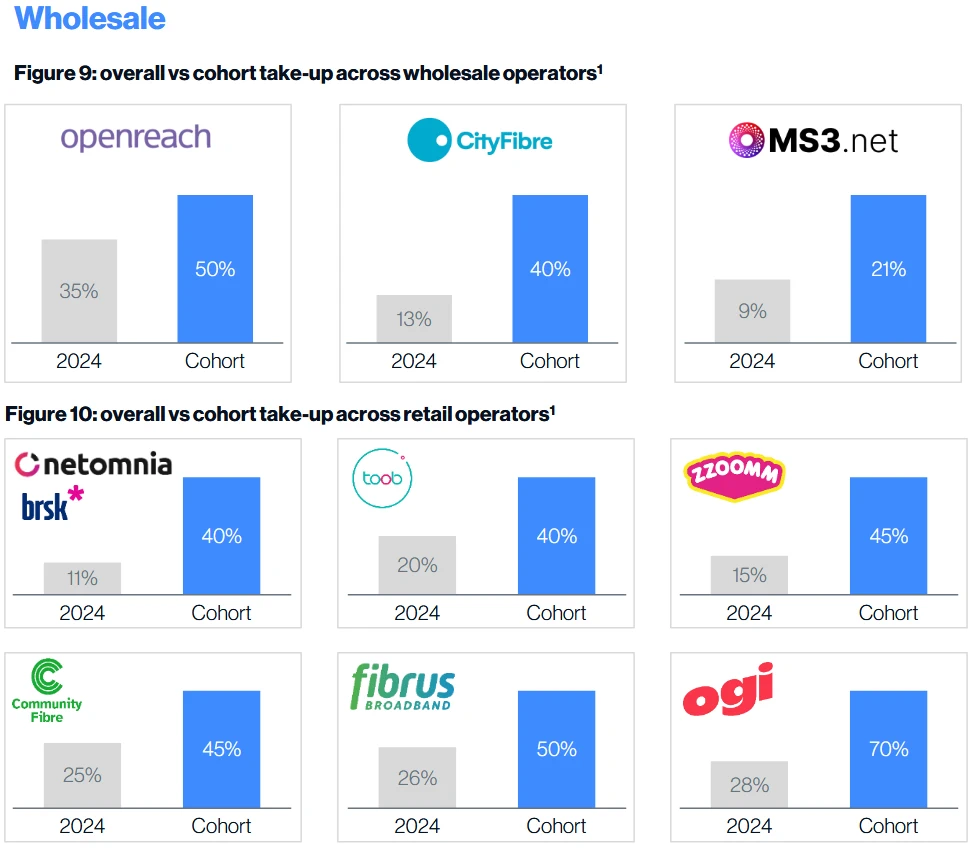
At present Zzoomm’s network, which is home to over 30,000 customers (15%+ take-up) and covers 202,000 premises (RFS), is currently available across parts of around 29 market towns and small urban communities in Berkshire, Oxfordshire, Herefordshire, Yorkshire, Staffordshire, Wiltshire and Cheshire. The provider is primarily a vertically integrated operator, which acts as both the network operator and a retail ISP.

NOTE: Zzoomm is supported by a total of £224m in capital = £100m debt via banks (here), £12m from private investors (“big chunk” of that comes from Matthew Hare) and £112m via Oaktree Capital (here).

The operator originally planned to cover 1 million premises, yet the difficulties of raising fresh capital recently forced their roll-out to stop (here and here) and they’ve instead been focusing on growing take-up. But growth via mergers and acquisitions are something that Zzoomm’s CEO, Matthew Hare, is known to have been actively exploring (here).

Meanwhile, Freedom Fibre, which is backed by InfraBridge (DigitalBridge) and Equitix, is a wholesale-only network that primarily covers 315,000 premises across parts of Cheshire, Greater Manchester and Shropshire in England. The operator previously aspired to cover 2 million premises and also holds the Government’s Project Gigabit contracts for 12,000 premises in rural parts of Shropshire (here), as well as 15,000 in Cheshire (here). But recently they also appeared to be focusing more on growing take-up (commercialisation) than network builds (here).

According to a new report on Sky News (credits to Nick for spotting), merger talks between Zzoomm and Freedom Fibre are said to have “progressed to a detailed stage,” although officially Zzoomm would only confirm that they were in negotiations with “numerous” parties and declined to comment specifically on Freedom Fibre (the latter has yet to comment).

Regular readers will know that a growing number of network operators, both big and small alike, have over the past couple of years moved to slow their network deployments (resulting in job losses) and switched their focus toward growing take-up to ensure some future stability. Such moves are a prudent course of action in the current climate of rising build costs and high interest rates, which makes it harder to raise fresh investment.

One other way to tackle these challenges is through consolidation, which is something that we’ve already seen happening quite a bit. But getting such deals and network integrations right can be a costly and expensive process. In this case there’s very little network overlap between Freedom Fibre and Zzoomm, except perhaps around Northwich where some overbuild does exist, yet otherwise a deal between the pair does look plausible.

Such a merger might well value the combined company at around £500m, although there’s currently no certainty that the pair will actually be able to reach a final agreement. Time will tell. We should point out that merger agreements like this take a long time to go through the motions, so we might not learn the outcome for a few more months.

UPDATE 15th Nov 2024 @ 7am

One curious aspect of Sky’s coverage is that they name Freedom Fibre’s investor as Basalt (aka – Basalt Infrastructure Partners LLP), which had us scratching our heads because Basalt backs FullFibre Limited (Fibre Heroes) and not Freedom Fibre. So it’s possible Sky may have confused either their investors or the operators themselves. But we can’t blame Sky, there are now so many providers with “fibre” in the name that it can be brain melting.

FullFibre Ltd covers 380,000 UK premises and has zero overbuild with Zzoomm. Both operators also have a similar sort of approach to build and might actually be a better fit.

BT Wholesale Investigating One Touch Switch Problems with UK ISPs

BT Wholesale, which supplies a number of UK ISPs with broadband services, has confirmed to ISPreview that they’re investigating an issue with consumer switching between providers via the One Touch Switching (OTS) process that appears to have been introduced on Monday and is disrupting some ISP switches and internet connections.

According to one of the ISPs that reported it to ISPreview earlier in the week: “Basically any order going in, regardless of any dates that are selected for the transfer, are ignored, and they become ceased records within hours as they are basically expecting it to complete the next day. We have said to them, if a customer wants next day, great, lovely improvement, but if a customer wants to move in 30 days, they need to honour that.

Naturally, some consumers like to elect a future switching date in order to work around contract end-dates and other real-life challenges, although Ofcom’s OTS rules generally require ISPs to try and switch consumers within 1 working day (“if technically possible“). This may help to explain BTW’s change, but their approach is causing problems. “We have a load of inbound transfers where now the old connection is ceased, but the new dates have all not been honoured, so customers are not connected with either provider,” said the ISP.

At the time of writing, we don’t know how many consumers and ISPs are being impacted by this problem, but one of the affected customers (David) told ISPreview today: “I now no longer have an internet connection. The BTW fix has effectively ceased my FTTP service.” The problems have also been picked up by Thinkbroadband.

A BT spokesperson told ISPreview:

“We are aware of an issue with One Touch Switching and are looking into this as an urgent priority.”

The hope is that a solution can be found to this sooner, rather than later, as consumers affected by it seem to have been left in limbo. But we’ve currently only seen a very tiny number of reports.

DCF Summarises Progress of UK Telecoms Operators Toward Net Zero

A new report from the Digital Connectivity Forum (DCF), which is an industry think-tank for the Government, has summarised how much progress the UK telecoms (broadband, mobile etc.) market has made with respect to sustainability and Net Zero (i.e. the goal of an organisation to remove as many carbon emissions as they produce) – with nearly all of the major operators having set targets.

The report, which surveyed 12 major telecoms companies during May 2024 (e.g. network operators, ISPs and vendors), revealed that 11 out of 12 have set some form of Net Zero target and 75% are using validated science-based targets. This level of target setting was found to be both a “positive signal of the continued commitment to net zero and a sign that the telecoms sector is recognising and responding to climate concerns“.

NOTE: The DCF’s sponsors are: Allpoints Fibre, BBC, BT, Cellnex, CityFibre, Cornerstone, DSIT (Gov), Digital Mobile Spectrum Limited, Ericsson, Fibrus, Gigaclear, Hyperoptic, NexFibre, Openreach, Sky, TalkTalk, TechUK, Three UK, Virgin Media, O2, Vodafone, Vorboss and the Wireless Infrastructure Group.

Other key findings included:

➤ 70% identified renewable energy transition as the largest driver for operational emissions decrease to date.
➤ 5 out of 11 identified fleet transition as a potential large-scale driver for scope 1 & 2 reductions.
➤ 50% have fleet transition targets.
➤ 90% identified green skills gaps as a barrier.

The report also highlights interesting areas such as the potential for certain drivers to decrease overall emissions, including fleet transition, renewable energy switching, fluorinated gas reduction from networks and data centres, and the use of data analytics to focus sustainability strategy. But unfortunately, we only get small bits and pieces of data from the report, and it doesn’t compare the progress of each company, which would have been useful.

Will Ennett, Chair of the DCF’s Climate & Sustainability Work Group, said:

“The members of the Digital Connectivity Forum Climate and Sustainability Working Group have recognised the urgency of climate change. As we face a world that is rapidly changing, many companies are already taking impressive action to curb their environmental impact and make a difference. I want to take this opportunity to thank all members for their enthusiastic collaboration, and to the Digital Connectivity Forum team for their tremendous dedication in creating this report.”

The full report will shortly be available at this link (PDF).

Ofcom UK Warns One Touch Switching Laggard ISPs to Get Onboard

The UK telecoms regulator has warned that they are “prepared to take action” against broadband ISPs that have failed to adopt the new One Touch Switching (OTS) process, which went live on 12th Sept 2024 and aims to make it easier and quicker for consumers to change provider. But not every ISP has joined, which is causing some consumers to struggle with switching.

Implementation of OTS is being handled by the industry-led One Touch Switching Company (TOTSCo), which acts as a sort of centralised messaging platform that all ISPs must use in order to properly harness the new process. But despite OTS being a mandatory requirement for all broadband and phone providers, some ISPs are continuing to lag behind on adoption, which can make it difficult for customers on those providers to switch.

NOTE: Ofcom states that all communications providers switching a UK residential customer’s Internet Access Service and/or Number-based Interpersonal Communications Service, which is provided at a fixed location, are in scope of their OTS rules, and must follow the OTS process.

Initially this wasn’t such a problem because, due to teething problems with TOTSCo’s matching process (i.e. ensuring that customer details are correctly verified and migrated between providers), Ofcom briefly allowed ISPs to retain the old NoT+ (Notification of Transfer) migration process – until 24th October 2024 – to act as a fallback. The loss of that fallback thus put everything on TOTSCo’s still imperfect system. But imperfect or not, none of that matters when an ISP hasn’t even managed to go live on the platform yet.

We don’t know how to handle transfers from these providers. Today alone, we have had 3 orders for [redacted] that we can’t transfer, which is making us look like idiots. All we are doing is referring everyone to check the live TOTSCo list as proof,” said one provider to ISPreview, after becoming frustrated with ISPs that have yet to implement the new process.

An Ofcom spokesperson told ISPreview:

“We’re aware of certain companies that are not signed up to the One Touch Switch process, and we’ll be raising this with them. Providers have had more than enough time to implement this, and we’re prepared to take action against those that don’t comply.”

At least one ISP is known to have lodged a formal complaint with the regulator about the absence of certain providers from OTS (this mostly reflects smaller ISPs), which Ofcom will no doubt be looking at as part of their wider enforcement programme. Ofcom does have the power to impose significant financial penalties upon communication providers that break their rules.

According to TOTSCo, as of 11th November 2024 some 280 brands (e.g. ISPs, mobile operators and others) are now live in their public production directory, although it only takes a quick scan to realise that some names are absent from this list (e.g. Yayzi, Uno/XILO, Brillband, Pulse8, Rocket Fibre and others). We know that some of those are in the process of going live, often via a Managed Access Provider (MAP), but others remain uncertain.

Interestingly, some of the laggards in the OTS process don’t appear to have an Ofcom Reseller Identification (RID) code, which is a unique three-letter and three-number code that identifies a company that resells telecom services and telephone numbers in the UK.

Meanwhile, the latest data from TOTSCo (here) shows that the switch match success rate is still hovering slightly above the 60% mark. This reflects the number of delivered match success messages as a percentage of match request messages. But the customer experience will be better than this, as some of these messages are repeat attempts to match the same customer between providers.

Broadband Altnet Spring Fibre UK Sold to Harmony Networks for Just £1.5m

Alternative broadband operator Spring Fibre, which began attempting to deploy a new 10Gbps capable wholesale full fibre (FTTP) network for ISPs to use in 2021 – starting in Lincolnshire (here), has been sold by their administrators to Leeds-based Harmony Networks for £1.5m after only having passed 12,000 UK premises (RFS).

The operator, which was initially backed by Kingsley Capital Partners and telecoms specialist Graphite Strategy, is known to have originally secured an investment (loan) of “up to” £155m from R&M’s (River and Mercantile) infrastructure business to support their original aspiration of covering 1 million premises in England (here).

However, in the years since 2021, we’ve seen very few updates on their build progress and no sign of any retail ISP availability. The operator did appear to start building in Lincoln, as well as the small towns of Mablethorpe and Louth during early 2023 (here), while some of our readers also claimed to have spotted their contractors, SCD, working in or around locations like Garforth/Kippax, as well as the village of Great Preston.

The problems at Spring Fibre started to become more evident in September 2024 with the publication of their annual accounts (here), which revealed that their principal investor would “not continue to fund its network construction plan“ or meet their continued operational expenditure (finding a new investor in today’s environment of high interest rates and competitive network build is a challenging prospect).

Nevertheless, a spokesperson for the altnet told ISPreview, perhaps rather over optimistically, that Spring Fibre was still “in a strong position as they continue to build network in the East and Northeast of England, with supportive investors, having gone live with Customers in recent months.” But shortly after that they moved to appoint an administrator (here) and Fti Consulting later secured the role.

Outcome of Administration

Fti Consulting have now published their statement of proposals, which lifts the lid on the reality of Spring Fibre’s situation and confirms that, following their appointment, the joint administrators “completed a sale of substantially all of the Company’s assets to Harmony Networks Limited for £1.5m“. This asset purchase comprises intellectual property rights; plant and machinery; work in progress (“WIP”); business information; IT; stock; office equipment; and certain contracts.

The document, which has been seen by ISPreview, reveals that “despite ongoing investment and successfully growing its network to 12,000 ready-for-service premises, the Company has not reached the stage where it was generating revenue, cash or profits and so has been dependent on the support of its shareholders and the Secured Creditor to fund the Company.”

The administrator’s report notes that, by July 2023, the Company had already utilised c.£15m of its Loan Agreement and, despite later attempts to reduce the “cash burn”, the Company continued to require funding in the region of c.£1.5m per month.

Extract from Administrator’s Report

However, the Company faced challenges from rising build costs in a highly competitive market, resulting in the abandonment of certain build projects, with overbuild threats materialising at a faster pace than anticipated, procurement challenges as well as the ongoing operating cost outflow given the pre-revenue nature of the asset.

In September 2023, the investors brought in a new CEO to re-invigorate the business, establish a new management team and undertake an operational restructuring of the Company. The new management team identified £5.1m of impairments to the build projects undertaken to date.

In May 2024, Fiera Infrastructure took over from RMI (the fund manager responsible for overseeing the investment into the Company). Representatives from Fiera subsequently replaced the directors appointed by the former fund manager.

The Company continued to incur losses (c.9.0m EBITDA loss in FY23 and a £2.8m EBITDA loss in the year to June 2024) and to draw down further on the Term Loan to fund the ongoing fibre roll-out.

The Company was also unable to meet its cash pay interest due to the Secured Creditor on 30 June 2024 or 30 September 2024 amounting to c.£664k and c.£619k respectively. The Secured Creditor is said to have reserved their rights in respect of the non-payment which constituted an Event of Default.

As we already known, Spring Fibre ultimately failed to find a new source of investment, although it is revealed that they initially received a non-binding offer from one unnamed operator to buy the business before it fell into administration. But following more engagements, the offer was withdrawn and it was later deemed that “no solvent solution could be found“, which is when the administrator was appointed.

During the week commencing 21 October 2024, the Company recommenced an accelerated sale process and contacted 16 parties (14 of which had been contacted during the initial M&A process). The parties were informed that the Directors had filed an NOI, and that the business and/or its assets were still available for sale. A bid deadline of 28 October 2024 was set, and three offers were received, including an offer for the Company’s assets from Harmony Networks Limited (the “Purchaser”),” added Fti’s report.

The offer received from Harmony Networks is said to have “represented the best return to the creditors as a whole” (i.e. as opposed to letting it all fail), although at £1.5m (c. £125 per premises) it’s obviously a price that falls well below the amount of money that has already been blown (creditors won’t be getting much of their money back). Just for context, the Secured Creditor’s lending to the Company as at the date of Administration was c. £33.5m.

We don’t know much about Harmony Networks itself, but the SCD Group (Spring’s contractor) is stated to be an entity under the same person of significant control as the Purchaser. Quite what SCD plans to do with the network they’ve just purchased is unclear, but we do note that their engineers have helped to build some other fibre networks too, such as for Connexin.

EE takes coverage to the top of Ben Nevis 

News 

The addition plays a key role in enhancing the team’s ability to respond to emergencies, especially in areas previously lacking coverage

EE has teamed up with Lochaber Mountain Rescue Team (LMRT) to improve the connectivity and support search and rescue operations on Ben Nevis. Using existing 35-meter mast site located in Glen Nevis, this collaboration aims to enhance safety in one of the UK’s most popular yet challenging outdoor destinations. 

The mast, which has been providing 4G connectivity to EE customers and 999 coverage to all visitors, is also part of the UK Home Office’s Emergency Services Network (ESN) – a critical communications system for emergency services. The site’s strategic location in Glen Nevis, a popular area that attracts over 400,000 visitors annually, is crucial for addressing coverage gaps, particularly in ‘shadowed’ areas where the natural terrain had previously blocked signals. 

EE and LMRT worked together to install a single antenna and cable to the mast, which has significantly expanded the network’s range and improved communication capabilities for rescue teams. Since the installation of LMRT’s equipment just under two months ago, the team has responded to 17 callouts. Notably, two of these were in areas with no coverage before, and nine were in parts of Ben Nevis where coverage has been greatly improved.  

“Communications play a vital role in all of our rescue operations. We primarily use VHF radios to communicate with our base and other team members on the hill. We have had communication challenges in Glen Nevis and some aspects of Ben Nevis for many years, and the opportunity to locate a ‘repeater’ on this tower, with the support of BT Group, will make our operations safer and more efficient,” said Ian Pooleman, Secretary and Medical Officer at LMRT in a press release. 

“This is a simple yet effective example of how we can diversify the use of our portfolio of physical assets, many of which are in remote locations, to support the UK’s broader digital needs and connect more people for good, both now and into the future,” echoed David McKean, BT Group’s Tower Division Director. 

Join us at next year’s Connected North, 23-24 April in Manchester. Get hugely discounted tickets here for a limited time only! 

Also in the news:
Verizon extends US defence contract in $98m deal
Top 5 stories from Broadband Communities last week
UScellular sells spectrum to AT&T for $1 billion