A mandatory leap: Why AI is fast becoming part of ‘Industrial DNA’ for manufacturing | Total Telecom

Original article Total Telecom:Read More

Interview

We spoke with Liu Chao, CEO of the Huawei’s Manufacturing & Key Enterprise Account business unit, about the seismic impact AI is having for the manufacturing industry

At Mobile World Congress 2026, AI finally appeared to be coming of age. From myriads of commercial AI agents to early demonstrations of physical AI, it was clear that AI was finally becoming

For Huawei’s Liu Chao, the era of treating AI as a high-tech accessory is over for the manufacturing sector.

“AI is now more than tools,” said Liu in an interview with Total Telecom. “It can be a unique distinguisher for manufacturers to set themselves apart from their competitors[…] AI is now becoming an important paradigm shift in innovation and in leadership.”

““This shift is being driven not only by the growing maturity of AI, but also by the urgent need for manufacturers to strengthen their competitiveness. Established leaders in traditional manufacturing sectors, such as automotive, are facing increasing pressure as more players actively embrace advance technologies.

Given the precision and high standards required in manufacturing, industrial players place a strong emphasis on proven reliability and predictable outcomes. This means they tend to wait for new technologies have demonstrated clear value and stability. For Liu, this urge to wait is a “trap”.

“Adoption of AI is not optional. It’s a mandatory choice you have to make. The question is not whether to do it or not, but how to do it,” he said.

Bridging the expertise gap

Perhaps the biggest hurdle to adoption, Liu explained, is the lack of cross-discipline expertise. Industrial experts are typically not AI experts, and vice versa,

“I think one of the key priorities for manufacturers adopting AI is deepening their understanding of the technology and its evolving trends,” said Liu. “This also means strengthening capabilities in data and digital infrastructure, while developing more talent with AI and IT expertise – both of which are essential to fully unlock the value of AI.”

For AI adoption to scale across industry, both manufacturers and tech companies need to cultivate multidisciplinary talent that combines both industrial and digital expertise.

“We need AI experts who have the knowledge and background in the manufacturing sector,” he said.

It is only with this shared expertise, Liu argues, that the industry will be able to develop AI models tailored to the manufacturing sector’s specific needs.

“General models like OpenAI answer questions based on public information. But when it comes to the data about a specific company, industry, or process, these models are not good at giving very specific answers,” said Liu. “In manufacturing companies, the data about operation management, production processes, and research and development is proprietary and private. So, they need specialised solutions.”

Practical first steps: Pilot projects and infrastructure foundations

With this in mind, what does early AI adoption look like for manufacturing companies?

For Liu, initial focus should be not on overall transformation, but on addressing specific challenges.

“When a manufacturing company comes to us and says they want to begin using AI, we first discuss their pain points in their business,” Liu said, noting that identifying the right use cases can generate early value.

“We have to find some typical cases where AI can be applied and give a quick win to our customers,” Liu said. These early projects often act as pilot programmes that help organisations build internal experience and refine their data strategies.

“In the first stage we identify scenarios as the first batch of AI adoption pilots,” Liu explained. “Then in the next step we review their more confidential or private data in production or R&D and help them standardise it, ready for use in AI models.”

Automotive taking a lead

One manufacturing industry leading the pack when it comes to AI adoption is the automotive industry.

“Each year in China, 50% of new cars are connected to the internet and are electric vehicles. The changes in the market are very fast. These days, auto manufacturers are launching their new car models almost as frequently as mobile phone makers are launching phones,” he said, adding that “autonomous driving and smart cockpit capabilities are all enabled by AI models.”

The most advanced carmakers are using AI across product development, factory operations, and quality inspection. This is allowing customers to enjoy a far greater level of personalisation as part of a C-to-M (Consumer-to-Manufacturer) framework.

“It is an end-to-end process that allows full customisation by the consumers,” explains Liu. “It’s how auto manufacturers in China are trying to win in such fierce competition.”

“In the assembly line, a fully assembled car is built every minute,” Liu continued. “When the customer chooses a specific configuration – say, for example, a yellow safety belt – you have to make sure that yellow belt arrives at exactly the right point in the assembly process. That needs AI-enabled scheduling with the data flowing from the order side directly to the production.”

Networks come first

Of course, a strong foundation of digital infrastructure is a critical requirement in this journey.

“The precondition is that you have very solid network connections and very good hardware,” Liu said. “Without this, putting AI into action is incredibly difficult.”

For Liu, the pace of change means manufacturers must continue learning and adapting as AI technologies evolve.

“You cannot wait for the latest technology for fear of being left behind because AI is changing so quickly,” he said. “You have to learn throughout the process of adoption.”

Keep up to date with all the latest telecoms news with the Total Telecom newsletter

Also in the news
World Communication Award Winners 2025
Ofcom clears the way for satellite-to-smartphone services
LG Uplus’s AI voice call app glitch leaks user data

The post A mandatory leap: Why AI is fast becoming part of ‘Industrial DNA’ for manufacturing appeared first on Total Telecom.

TIM and Fastweb create JV to build 6,000 mobile towers | Total Telecom

Original article Total Telecom:Read More

Press Release

TIM and Fastweb + Vodafone have signed a non-binding agreement for the construction and operation of new mobile towers (passive infrastructure) in Italy, with the prospect of creating up to 6,000 new sites. The joint initiative also aims to accelerate the  national rollout  of 5G.

The project will enable TIM and Fastweb + Vodafone to improve operational efficiency and align costs with the European average, while maintaining high infrastructure quality standards and the technological flexibility needed to develop next-generation networks.

The initiative will initially be implemented through a  joint venture  owned equally by TIM and Fastweb + Vodafone, with the aim of evaluating the entry of third-party investors into the company at a later stage to optimize its financial structure. The infrastructure will also be made available to third-party telecommunications operators under an open access model.

Construction activities will begin according to a multi-year development plan. TIM and Fastweb + Vodafone will act as  anchor tenants  of the new infrastructure, signing long-term agreements for the use of the towers at market conditions. The parties will also evaluate the possibility of providing additional services.

The initiative contributes to strengthening the sustainability of the telecommunications sector in Italy and will allow for greater resources to be allocated to the development of next-generation networks. The project is subject to the necessary authorizations from the relevant authorities.

Keep up to date with all the latest telecoms news with the Total Telecom newsletter

Also in the news
World Communication Award Winners 2025
Ofcom clears the way for satellite-to-smartphone services
LG Uplus’s AI voice call app glitch leaks user data

The post TIM and Fastweb create JV to build 6,000 mobile towers appeared first on Total Telecom.

O2 deploys Europe’s first pre-assembled mobile mast in Kent | Total Telecom

Original article Total Telecom:Read More

Press Release

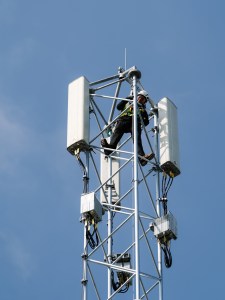
O2 installed Europe’s first pre-assembled mobile site in Sandwich, Kent, introducing an innovative new approach to building mobile infrastructure that significantly speeds up deployment and minimises issues on site, meaning reliable connectivity can be delivered to customers more quickly and efficiently.

Traditionally, engineers installing antennas, radios and cabling would have to connect and configure hundreds of connections on site, often working at height and exposed to the elements. Using technology developed by Vecta Labs, these components are now fully assembled and tested before they ever reach the tower, dramatically simplifying installation while improving quality control.

Each unit is pre-assembled and validated in a controlled testing environment using specialist equipment, including anechoic chambers that allow engineers to precisely measure radio performance. They are then subjected to simulated wind conditions to replicate real-world stresses before they leave the factory, ensuring every mast meets the same exacting standard on arrival.

Passive radio frequency components such as antennas, cables and connectors are also tested for Passive Intermodulation (PIM), a common source of interference that can degrade network performance. By identifying and resolving these issues before deployment, O2 can ensure consistent mobile network performance from the moment a site goes live.

The approach also dramatically simplifies installation, reducing the number of connections engineers must complete on site from around 100 cables to just six, helping save time and minimising the risk of errors. The first European deployment was completed in Sandwich, Kent, where the pre-assembled equipment was installed in four hours, reducing time on site by up to 75 per cent compared with traditional deployments.

For O2 customers, this means new and upgraded sites can be installed faster with less network downtime, helping to improve coverage and boost capacity so they can stream, browse and stay connected on the move. O2 plans to go deploy 100 of these pre-assembled sites across the UK this year as part of its £700m Mobile Transformation Plan.

Steven Verigotta, Director of Mobile Delivery at O2, said: “Moving one of the most complex parts of building a mobile mast into the factory is a real step forward for our network. It allows us to install sites faster, improve quality control and ensure customers benefit from stronger, more reliable connectivity from the moment the site goes live. This is just one of the improvements we’re making as part of our £700m Mobile Transformation Plan which is helping to create the biggest and most reliable network in the UK.”

John Bonello, Director and Founding Member at Vecta Labs, said: “We’re proud to see Europe’s first Vecta Labs deployment delivered with O2. This approach combines pre-assembly, precision RF testing and simplified installation to help operators deploy infrastructure faster while maintaining the highest standards of performance.”

O2 was recently recognised as the most improved mobile network across Europe in Umlaut Connect’s Mobile Network Test, an independent and comprehensive benchmarking report. It was also awarded Best Mobile Network Coverage at the Uswitch Telecoms Awards for the second year in a row, which recognised the scale, reach and reliability of O2’s mobile network.

Keep up to date with all the latest telecoms news with the Total Telecom newsletter

Also in the news
World Communication Award Winners 2025
Ofcom clears the way for satellite-to-smartphone services
LG Uplus’s AI voice call app glitch leaks user data

The post O2 deploys Europe’s first pre-assembled mobile mast in Kent appeared first on Total Telecom.

Freedom Telecom International and Nokia signs Strategic Cooperation Agreement to begin joint innovation work | Total Telecom

Original article Total Telecom:Read More

Freedom Telecom International (FTI), a subsidiary of Freedom Holding Corp. (NASDAQ: FRHC), has signed a Strategic Cooperation Agreement with Nokia. As a first step, Freedom Telecom International and Freedom Lifestyle Group will inaugurate an Innovation Lab at Nokia’s Sunnyvale, California campus in the coming months.

The initial focus is on designing next-generation AI data center blueprints, conducting feasibility studies in Kazakhstan and neighboring markets, and leveraging Nokia’s global ecosystem to scale cloud and AI-driven services. FRHC, a diversified international financial services group who intends to lead the region’s digital infrastructure buildout, views this cooperation key to realize this ambition and pave the way to further joint projects globally.

The move comes as Kazakhstan intensifies efforts to establish itself as a regional hub for artificial intelligence, digital talent, and sovereign cloud capabilities – domains that are rapidly becoming global benchmarks for economic competitiveness. Central Asia, historically underpenetrated in hyperscale infrastructure, is now drawing growing attention from global technology providers and international investors seeking new growth corridors.

Timur Turlov, Founder & CEO of Freedom Holding Corp., commented: “Kazakhstan is investing heavily in the future of cloud and AI, and global partnerships play an important role in this journey. Over the past year, we began collaborations with companies like NVIDIA and OpenAI to help accelerate high performance computing, digital skills, and modern AI infrastructure. Exploring opportunities with Nokia reinforces this direction and helps us evaluate technologies and expertise that are necessary for technological progress across our global footprint.”

Johannes Hummer, CEO of Freedom Telecom International, added: “This agreement is an important milestone for Nokia and FTI as our mission includes crafting international partnerships’ for Freedom Holding Corp. with Telcos and TechCo’s. The Innovation Lab in Sunnyvale will allow both teams to test ideas and learn together. It marks the beginning of a journey focused on innovation, collaboration, and long-term impact.”

The newly established Innovation Lab will serve as the venue to test and evaluate AI architectures, cloud technologies and advanced networking solutions. Freedom Lifestyle Group will use the Innovation Lab to test AI-powered consumer services across its e-commerce and health tech businesses including chat and voice assistants, agentic AI systems, and next-generation Superapp capabilities – and organize trials to see how Nokia’s infrastructure performs and could scale in a real-world environment.

Alexey Lee, CEO at Freedom Lifestyle Group, commented: “The Innovation Lab provides an important platform to advance our already established digital services into their next generation – leveraging AI to deliver more intelligent, personalized, and seamlessly integrated experiences across the Freedom ecosystem.”

By combining Nokia’s technology with Freedom’s ecosystem play, global market access and capital markets expertise, the companies are assessing how to unlock scalable digital infrastructure opportunities and support the next phase of digital development worldwide.

Mikko Lavanti, Senior Vice President for Middle East and Africa at Nokia, said: “We look forward to working closely with the Freedom teams as they explore different approaches for cloud, AI initiatives, Lifestyle services and beyond. I am impressed by their clarity of purpose and the commitment their team brings to this work. The geographies they consider for future infrastructure expansion are highly promising. We appreciate the strong engagement and hope to reveal opportunities where Nokia truly makes a difference in advanced connectivity and brings undisputed value.”


About the Signing Parties

Nokia is a global leader in connectivity for the AI era. With expertise across fixed, mobile, and transport networks, we’re advancing connectivity to secure a brighter world. To learn more about Nokia, visit nokia.com 

Freedom Telecom International supports global partners in deploying and integrating Freedom Holding Corp’s portfolio of digital financial and lifestyle services. FTI also evaluates and executes investment opportunities in the telecom and fintech sectors, promoting financial and digital inclusion in emerging and frontier markets.

Freedom Holding Corp. is a leading international provider of investment and brokerage services across the markets of Central Asia, Americas, Europe and Middle East with more than 16 years of experience in global financial markets. The Holding’s shares are publicly traded on the NASDAQ stock exchange under the ticker FRHC with current market capitalization at USD 7.3 billion, and total assets amounting to USD 10.3 billion. The total number of clients in its digital ecosystem exceeds 11 million.

Freedom Holding Corp. employs over 11,000 professionals who are based in 231 offices in 22 countries, including Kazakhstan, the United States, the United Arab Emirates, Cyprus, Spain, France, Germany, Greece, Uzbekistan, and Armenia. The company’s principal executive office is located in New York City.

To learn more about Freedom Telecom International, visit: freedomtelecominternational.com To learn more about Freedom Holding Corp., visit: freedomholdingcorp.com
Media Contacts: Freedom Telecom International: co*****@*************************al.com

The post Freedom Telecom International and Nokia signs Strategic Cooperation Agreement to begin joint innovation work appeared first on Total Telecom.

Ericsson’s US subsidiary hit by cyberattack | Total Telecom

Original article Total Telecom:Read More

News

According to a filing, attackers may have accessed data from 15,000 customers and employees

This week, Ericsson has revealed that a service provider that was storing the personal data of its US subsidiary, Ericsson Inc., has experienced a cyberattack.

The breach occurred between April 17 and 22, 2025 and was discovered six days later, on April 28.

Following discovery, the vendor notified the FBI and hired external cybersecurity experts to investigate.

This investigation was completed on February 23, 2026.

Data belonging to 15,661 individuals was compromised in the incident, with exposed data includes names, addresses, Social Security Numbers, Driver’s License numbers, government-issued ID numbers (e.g., passport, state ID cards), financial Information (e.g., account numbers, credit or debit card numbers), medical Information, and dates of birth.

No bad actor has yet taken responsibility for the attack and Ericsson says there is no evidence of misuse so far.

“Based on the investigation, our service provider determined that a limited subset of files may have been accessed or acquired without authorization between April 17, 2025 and April 22, 2025,” Ericsson said in statement to customers.

“As part of its investigation, it retained external data specialists to conduct a comprehensive review of the potential affected files to identify any personal information. That review was completed on February 23, 2026 at which time we determined that that some of your personal information was contained within the affected files.”

Ericsson is offering affected customers free IDX identity protection services, including credit monitoring, dark web monitoring, identity theft recovery, and a $1 million identity fraud loss reimbursement policy to those who enrol by June 9, 2026

Also in the news
World Communication Award Winners 2025
Ofcom clears the way for satellite-to-smartphone services
LG Uplus’s AI voice call app glitch leaks user data

The post Ericsson’s US subsidiary hit by cyberattack appeared first on Total Telecom.

Could war with Iran halt America’s blossoming data center boom? | Total Telecom

Original article Total Telecom:Read More

News

All eyes are shifting to the Strait of Hormuz as analysts warn of dire economic consequences resulting from war in the Persian Gulf.

By Brad Randall, Broadband Communities

The ongoing war involving Iran, the U.S., and Israel in the Middle East has sent economic shockwaves around the globe.

Now, as the conflict drags closer to entering its third week and continues to involve more nations, analysts are warning of massive supply chain impacts if the Strait of Hormuz is further engulfed by war.

It could have larger implications for the ongoing buildout of data centers in the United States.

Earlier today, the Associated Press quoted Hakan Kaya, senior portfolio manager at Neuberger Berman, as saying closure of the Strait of Hormuz could cause “the largest supply disruption in modern history.”

The report, filed by reporter Stan Choe, further warned that data centers could become more costly if wholesale prices jump with inflationary pressure.

It comes as Iran’s Revolutionary Guard has stated that oil will not be permitted through the critical maritime passage, according to the AP.

America is in the midst of a data center boom

Meanwhile, as concerns mount, the construction of data centers has been continuing at a breakneck speed in the United States, with Texas and Virginia both becoming hotspots for the facilities.

Impacts caused by global supply chain disruptions may also be felt by the global semiconductor industry, as was touched on in recent analysis posted by Richard Chuck Olivas, of TMBS Consulting in Singapore.

“Rapid expansion in artificial intelligence infrastructure, hyperscale data centers, and advanced computing platforms is accelerating global semiconductor demand,” he said. “Maintaining stable flows of energy, materials, and industrial gases is essential for sustaining the growth of the global semiconductor industry.”

Like the supply chain, technology infrastructure in the immediate region also remains vulnerable as the conflict continues.

A report from Rest of World last week detailed how Amazon, Microsoft, and Google have spent years building data centers across the Persian Gulf region.

Three AWS data centers, two in the UAE and one in Bahrain, were damaged in strikes this month, Rest of World reports.

In addition to threats from the skies, the Rest of World reported noted that many data centers in the Middle East are also reliant on subsea fiber-optic cables that run through the Strait of Hormuz and the Red Sea. Both bodies of water now come with serious security concerns, the report detailed.

The White House said today that tankers have not yet been escorted by the US Navy through the Strait of Hormuz, through which roughly a fifth of the world’s oil passes, according to the AP.

Subscribe to the Broadband Communities newsletter!

The post Could war with Iran halt America’s blossoming data center boom? appeared first on Total Telecom.

Huawei Hosts Green & Resilience Elite Club | Total Telecom

Original article Total Telecom:Read More

Press Release

[Barcelona, Spain – March 2, 2026] During Mobile World Congress (MWC) 2026, Huawei supported by content from GSMA Intelligence, hosted the third “Green & Resilience Elite Club.” The event, themed ” CHB Collaborative Development with Better OPEX & Resilience,” convened key participants including UNFCCC, GSMA Intelligence, ITU-T, and over 20 leading global operators such as Telkom SA, Telkomsel, Azerconnect Group, HKT and Turkcell, to engaged in deep discussions regarding the challenges and global best practices of the ICT industry’s dual-track transformation toward “Green + Resilience.”

Standard Advancement: Launch of “Green Network Index(GNI) Round 2”

In his opening speech, Mr. Peter Jarich, Head of GSMA Intelligence, noted that the GNI has become pivotal metrics for measuring the industry’s green transformation. During the event, representatives of the GNI project members jointly launched the “GNI Round 2,” focusing on two major leaps:

  • Full-Scenario Coverage: Expanding from a focus on mobile network to deep synergy between mobile and fixed networks.
  • Enhanced Participation: The number of operators participating in the GNI index has surged from 6 in 2024 to 24 today.

The upgraded assessment standard will further guide the construction of green and resilient networks, supporting the collaborative development of ToC, ToH, and ToB (CHB) services and bolstering the sustainable growth of the ICT industry.

Global Practice: Win-win in “Cost Reduction” and “Business Success”

Massamba Thioye, Principal Consultant, Founder and Former Head of the UGIH, UNFCCC, emphasized that the ICT industry acts as a “catalyst” for dual green and digital transformation. He argued that “connectivity” should drive social evolution from simple efficiency optimization toward deep-seated circular development.

Ms. Mpho McNamee, Chief Corporate Affairs Officer, Telkom SA, shared the triple transformation—Green Central Offices (CO) and Green Sites, Network architecture optimization, and Green energy transition. These initiatives have significantly enhanced operational efficiency and network resilience while reducing carbon emissions, achieving a win-win for business growth and network resilience.

Mr. Lloyd Chan, VP of Strategic Transformation at HKT, stated that HKT has moved beyond Green CO and Green Sites to complete network restructuring that supports AI and computing power. These initiatives not only reduce OPEX and convert idle resources into high-value assets but also lay the foundation for future AI and edge computing. HKT’s high-reliability, low-latency interconnection network in the Northern Metropolis, bridging to the Greater Bay Area, signals its successful evolution from a traditional carrier to a “technology leader.”

AI empowerment: Solving the triangular challenge of “Development, Green, and Resilience”

Singleton Zhou, President of Huawei GTS Network Consulting and System Integration Service Domain, noted that modern networks face the challenge of “entropy increase” caused by the coexistence of multiple generations and service convergence. On one hand, cross-domain data across infrastructure, site, access, bearer, and service layers is massive and often inaccurate. On the other hand, there is a complex trade-off between service development, green, and network security/resilience; a single comprehensive full service area can generate hundreds of potential modernization scenarios.

By leveraging AI agents to bridge the gap between physical and logical networks, Huawei continues to solve the long-standing “ICT Triangle” conflict: balancing service development, green, and network security/resilience. This helps customers efficiently build green and resilient networks while fostering CHB collaborative development.

Summit Dialogue: A New Blueprint for AI-Ready Green & Resilient Networks

During the panel discussion, experts from industry standards organizations, operators, and service providers reached three key consensuses on ” Challenges on ToC/H/B Collaborative Development with Green and Resilience”:

  • Strategic Balance: Collectively seeking the optimal solution for service development, green & resilience, and return on investment (ROI).
  • Standard Guidance: Utilizing the GNI as a benchmark to guide CHB synergy and drive continuous improvements in energy efficiency.
  • Technical Innovation: Applying network simulation and AI technology to simultaneously enhance energy efficiency, resilience, and commercial returns.

AI without robust connectivity remains an information silo. Leveraging cross-domain collaborative planning and simulation for service-network- synergy, we are continuously accelerating the modernization of sites and COs. This initiative empowers customers to build green, resilient, and high-quality network connectivity, ensuring that every connection is “Ready for AI.”

The post Huawei Hosts Green & Resilience Elite Club appeared first on Total Telecom.

Mobile AI is here: Why networks must evolve for the age of AI agents | Total Telecom

Original article Total Telecom:Read More

Partner Content

The Agentverse is no longer a distant conceptbut the trajectory of our society. We are moving toward a future where intelligent agents are as pervasive as electricity or water. Embedded across individuals, organisations and homes – and, act as the core engine of a new productivity. The explosion in mobile AI usage is accelerating the arrival of Agentverse. This very synergy—where intelligence meets network—took centre stage at the GTI Summit during Mobile World Congress Barcelona, held recently under the theme “Hello Mobile AI.” The event, which brought together operators, vendors, and ecosystem partners from across the globe, also marked the launch of the joint GSMA-GTI 2.0 cooperation and the Mobile AI White Paper.

Agents Are Already Reshaping Demand 

The scale of what is coming is already evident. AI-related mobile traffic is projected to grow at a Compound Annual Growth Rate (CAGR) of 73% between 2025 and 2033, with the crossover point,  where AI traffic surpasses conventional traffic, arriving as early as 2031. Edge-bound AI traffic is growing even faster, at a projected CAGR of 130% over the same period, as lightweight models and agent-driven applications push intelligence out of the cloud and closer to users. 

On the consumer side, the shift is already visible. Approximately 75% of consumers globally now use generative AI applications in daily life, with smartphones emerging as the primary access point, with nearly half using mobile GenAI apps for search, while 14% are already conversing directly with mobile AI agents. The device ecosystem is expanding rapidly beyond smartphones, with AI phones, wearables, AI glasses, and humanoid robots all entering the picture. Shipments of general-purpose embodied intelligent robots are forecast to hit 2.6 million units by 2035, representing a CAGR of 85%. 

On the enterprise side, the AI agent applications market is on an extraordinary growth trajectory, scaling from $159 million in 2024 to a projected $41.77 billion by 2030. More than 90% of enterprises across 32 countries surveyed by GSMA consider generative AI critically important to their digital transformation. The question is no longer whether AI agents will become ubiquitous — it is whether mobile networks will be ready when they do. 

The Network’s New Role: From Pipe to Platform 

For decades, mobile networks operated on a best-effort model, primarily for human-centric traffic—browsing, streaming, and messaging. However, Agentverse demands something fundamentally different: continuous, machine-to-machine interactions that are real-time, multimodal, and extremely latency-sensitive.

Agent services impose a new set of demands on mobile network, including large uplink bandwidth, ultra-low latency, high reliability and high-concurrency connections. The uplink requirement is particularly significant. Unlike traditional broadband, where traffic flows primarily downward to users, AI-driven services generate substantial upstream data, such as video streams, sensor inputs and model inference requests, that must reach the network without delay. 

To address these requirements, the industry is accelerating the deployment of 5G-Advanced (5G-A) technologies. 5G-A represents the next stage in the evolution of 5G networks and is a crucial step to 6G. It comes with capabilities to enable extremely low latency and high uplink capacity, critical to support both AI-driven applications and intelligent network operations.  

Technologies such as Uplink Carrier Aggregation (CA) and Supplemental Uplink (SUL) address the uplink bottleneck directly, bundling spectrum resources to deliver ultra-large bandwidth and low latency for intelligent devices operating in real time. Flexible slot allocation and multi-band coordination further enhance uplink capacity in high-demand scenarios. 5G-A commercialisation is accelerating globally, and the white paper is unambiguous: it is the foundational layer on which Mobile AI will be built. 

Network for AI, AI for Network 

The white paper introduces a framework that captures the bidirectional nature of this transformation: Network for AI and AI for Network. While Network for AI addresses the connectivity requirements of intelligent services, AI for Network focuses on embedding intelligence into network operations. 

Agent services require networks that can identify and differentiate multimodal traffic types, be it audio, video or sensor data, and apply the right quality-of-service treatment to each. For instance, a remote surgery application and a background data sync have fundamentally different requirements and the network must understand the difference and respond accordingly. This demands modal-level service awareness, cross-layer collaboration between devices, edge, network, and cloud, and a shift from the traditional one-size-fits-all connectivity model to what the white paper calls “scenario-customised connectivity.” 

On the other hand, AI for Network applies AI deeply into the network itself to drive network planning, operations, optimisation, and ultimately autonomy. The goal is a network capable of closed-loop “Perception–Cognition–Decision–Execution” across its entire chain, which can predict failures before they occur, dynamically allocate resources in real time, and self-optimise without human intervention.  

Two technologies are particularly relevant here. The Wireless Network Agent enables autonomous closed-loop operations within the radio access domain, using real-time analysis and inference to support network self-management. The A2A-T protocol — Agent-to-Agent for Telecommunications — is being standardised to build a unified, cross-domain, cross-vendor framework that enables networks to parse natural language business intents into network-wide collaborative tasks, moving toward genuinely intent-driven network management. 

Spectrum: The U6GHz Imperative

From a spectrum perspective, as service providers prepare the networks for the booming AI traffic, the U6GHz (6425-7125 MHz) band has emerged as a critical resource for 5G-A. It offers a combination of wide, contiguous channels and the capacity to support high uplink and downlink bandwidth that Mobile AI services demand. Following WRC23, U6GHz has been formally recognized as a key mobile communications band. Around the world, momentum is building: China, the UAE, Brazil, and several European countries are actively promoting spectrum identification, allocation, and testing Today, 5G-A already offers full support for U6GHzwith mainstream terminal chipsets and the broader industry chain now mature—paving the way for large-scale commercial deployment. Along with U6GHz band, millimetre wave (mmWave) bands can serve high-density hotspot environments where ultra-large capacity and ultra-low latency are required for immersive and real-time applications. AI-driven dynamic spectrum management, enabling intelligent aggregation and flexible scheduling across bands, will be essential to maximise efficiency as AI terminal density increases. 

AI-MOS: Measuring What Actually Matters 

As Mobile AI matures, the industry faces a challenge that goes beyond building the right infrastructure: how do you measure whether it is actually working? Traditional network KPIs [Key Performance Indicators], including throughput, latency and coverage, are not adequate for assessing the quality of a multimodal AI interaction. 

To address this, the industry is developing AI Mean Opinion Score (AI-MOS), built on the foundation of ITU-T Recommendation Q.4072. It is an evaluation framework designed to establish quantifiable, objective standards for multimodal interactive experience across the full value chain.  

The Road to the Agentverse 

While Mobile AI imposes new requirements on the network, it also offers incredible revenue opportunities, from enterprise AI services to new digital ecosystems built around intelligent agents. The operators who move earliest to upgrade network infrastructure and build AI-centric networks, establish ecosystem partnerships and develop new service models will be best positioned to capture that value. Those who treat Mobile AI as a future concern risk finding themselves relegated to the role of dumb pipe in a world where the network is supposed to be the intelligence layer.  

The post Mobile AI is here: Why networks must evolve for the age of AI agents appeared first on Total Telecom.

Openreach’s network to support acoustic sensing for leaky water pipes | Total Telecom

Original article Total Telecom:Read More

Press Release

A groundbreaking technology trial – which uses Openreach’s fibre broadband network to detect leaks in surrounding water pipes – has managed to prevent the loss of 2 megalitres of water – equivalent to the daily use of around 10,000 people, in just three months.  

Working with Affinity Water and UK technology company Lightsonic, the pilot uses Distributed Acoustic Sensing (DAS) – which converts Openreach’s fibre optic cables into thousands of sensors that can ‘hear’ and pin-point leaks from surrounding water pipes. 

The project aims to help companies like Affinity Water tackle one of its biggest challenges – leakage – with England and Wales losing around three billion litres of treated water daily through leaks1 – equivalent to the daily water use of more than 20 million people. That’s around a fifth2 of the country’s water supply, highlighting the urgent need for action. Affinity Water, along with the rest of the UK’s water industry has committed to halving leakage levels by 2050.

Developed by Lightsonic – the fibre-optic leak detection platform is currently being piloted in five locations – using Openreach’s near ubiquitous full fibre broadband footprint to monitor 650 kilometres of Affinity Water’s network. In its first locations, and in just three months, the fibre sensing technology was able to locate more than 100 leaks – saving 2 million litres of water a day – equivalent to more than 700 million litres every year, enough to supply around 10,000 people.

Trevor Linney, Director of Network Technology for Openreach, said: “The results of our pilot show that our new full fibre infrastructure can deliver value far beyond broadband – and could prove to be a real game changer in solving real-world challenges like water conservation.”

“Around 20 per cent of the UK’s drinking water is lost to leaks with water conservation a significant and growing issue for the nation. And, what’s great about this technology, is that it can be used to detect a whole range of things – from gas leaks to monitoring the health of big structures like bridges and tunnels. It has huge potential.”

Tommy Langnes, CEO of Lightsonic, said: “Transforming the telecom fibre-optic network into a continuous sensing layer unlocks entirely new ways to monitor utilities. Detecting 2 megalitres per day shows what’s possible when fibre sensing solutions and existing infrastructure are combined at scale.

“This collaboration demonstrates how fibre sensing can deliver measurable environmental impact today, while creating solutions for wider utility monitoring in the future.”

James Curtis, Head of Leakage at Affinity Water, added: “Strengthening how we identify and address leaks is central to our leakage strategy. By working with Lightsonic and Openreach, we’re enhancing our existing detection programme with continuous network monitoring, helping our teams target areas of interest more quickly and reduce the time leaks may run before repair.

“This technology complements the expertise of our field technicians, supporting earlier intervention, better planning and reduced disruption for customers — all by using fibre that’s already in the ground.”

How does it work? 

DAS technology works by detecting changes in the light signal used in fibre optic cables caused by vibrations from a leak or disturbance in surrounding networks. It uses machine learning to locate the exact point of the vibration, and it trains the system to separate background noise – like the rumble of traffic or roadworks, so that leaks stand out clearly — even in busy streets. The technology has big advantages over conventional detection methods, namely:

  • Continuous monitoring: Existing leakage detection relies on targeted surveys and skilled field teams working systematically across the network. Fibre sensing complements this approach by providing 24/7 monitoring, so leaks can be spotted sooner and reduce the time between surveys.
  • No need to dig: It uses the fibre that’s already in the ground — turning it into thousands of tiny “virtual sensors” – making it cheaper, quicker, and more environmentally friendly.
  • Targeted identification: The system recognises the unique acoustic “signature” of a potential leak and highlights an area to investigate – often to within a few metres, so repair teams are directed to the right spot.
  • Reduced disruption: By identifying leaks earlier, water companies can address them before they cause significant disruption, cutting emergency callouts and minimising impact on customers and road users.
  • Easy to scaleUsing the national reach of Openreach’s fibre network means the system can be scaled up across throughout the UK.

Keep up to date with all the latest telecoms news with the Total Telecom newsletter

Also in the news
World Communication Award Winners 2025
Ofcom clears the way for satellite-to-smartphone services
LG Uplus’s AI voice call app glitch leaks user data

The post Openreach’s network to support acoustic sensing for leaky water pipes appeared first on Total Telecom.

What makes a smart community? Here’s why connectivity matters | Total Telecom

Original article Total Telecom:Read More

Podcasts

All the gadgets in the world won’t make a community live up to smart-community expectations if the foundational connectivity is neglected.

By Brad Randall, Broadband Communities

Maz Khan, the president of Vitalis Smart Communities, says the term smart community is thrown around too loosely nowadays.

“Somebody puts up a Nest thermostat and some sort of smart lock and all of a sudden it’s a smart community,” he said, while appearing on Beyond the Cable as a recent guest. “Well, that’s not it.”

Khan said he believes connectivity is the foundation of any smart community.

“You can put all the gadgets you want,” he said, “but if you don’t have a network that can support it, all you’ve done is just frustrate the residents and the tenants who are living in that building or community.”

Khan said a truly smart community is one where systems and solutions work together in full integration to make the lives of residents easier.

Seeing connectivity as the foundation

Similarly, he said AI offers lots of potential to enhance the smart community model. He argued, however, that without the foundation of solid connectivity communities will miss out on the benefits of AI.

“I want to look at connectivity as a basis and then build the layers on top,” he said.

Khan, who is also one of the company’s founders, said their parent company, Vitalis, owns and operates a commercial real estate portfolio worth approximately a quarter billion dollars.

Vitalis Smart Communities is mainly geared towards consulting for HOAs, condos, multifamily ownership groups, and developers on their telecom and technology strategies, Khan said.

“We’re right now one of the nation’s leading and fastest growing advisory firms,” he said. “And honestly, I think it’s due to all the hard work our team puts out and the references our clients are giving to the rest of the world.”

Listen to the full interview on Apple Podcasts to hear more of Khan’s nuanced approach towards smart-community connectivity.

Subscribe to the Broadband Communities newsletter!

The post What makes a smart community? Here’s why connectivity matters appeared first on Total Telecom.